Boosting Teacher Retention: 2026 Programs Analysis in US
Anúncios
Educational institutions across the United States are implementing targeted initiatives to address educator shortages, focusing on competitive compensation, structured mentorship, and streamlined credentialing pathways.
By improving working conditions and reducing administrative burdens, these programs aim to enhance job satisfaction and stabilize the teaching workforce nationwide.
Understanding the Current Landscape of Teacher Retention
The challenge of teacher retention remains a significant concern for educational institutions across the United States. High turnover rates disrupt learning environments and place immense strain on remaining staff, impacting everything from curriculum delivery to student well-being.
Recent data indicates that while some states have seen marginal improvements, others continue to struggle with educators leaving the profession at alarming rates. This ongoing trend necessitates a deeper look into what successful programs are doing differently to reverse this trajectory.
Our 2026 analysis highlights key factors contributing to both departures and sustained commitment among teachers. It’s clear that a multifaceted approach is required to address the root causes of attrition and foster a more supportive environment for educators.
Anúncios
Economic Incentives and Compensation Models
One of the most direct ways to impact teacher retention is through competitive salaries and robust benefits packages. States and districts implementing innovative compensation models, such as performance-based pay or housing assistance, are seeing positive results.
These financial incentives often alleviate economic pressures, allowing teachers to focus more on their pedagogical responsibilities. The discussion around fair wages continues to be a cornerstone of any effective strategy for Boosting Teacher Retention: A 2026 Analysis of Successful Programs Across the United States.
Increased base salaries in high-cost-of-living areas.
Performance bonuses tied to student growth and professional development.
Student loan forgiveness programs for long-term commitment.
Affordable housing initiatives near school districts.
Beyond base pay, comprehensive health insurance, retirement plans, and paid family leave contribute significantly to a teacher’s overall job satisfaction and willingness to stay. These benefits signal an investment in their long-term welfare.
Professional Development and Growth Opportunities
Investment in continuous professional development is a critical component of successful teacher retention strategies. Educators, like professionals in any field, seek opportunities for growth, skill enhancement, and career advancement.
Programs that offer tailored training, leadership pathways, and access to advanced degrees are proving highly effective. This not only improves teaching quality but also fosters a sense of value and purpose among staff, directly contributing to Boosting Teacher Retention: A 2026 Analysis of Successful Programs Across the United States.
The emphasis has shifted from generic workshops to personalized learning experiences that address individual teacher needs and school-specific challenges. This targeted approach ensures that professional development is relevant and immediately applicable in the classroom.
Mentorship and Induction Programs
New teachers, in particular, benefit immensely from structured mentorship and induction programs. Pairing novice educators with experienced mentors provides crucial support during the challenging initial years of teaching.
Anúncios
These programs offer practical guidance, emotional support, and a sense of community, significantly reducing the likelihood of early career burnout. Effective mentorship is a cornerstone for Boosting Teacher Retention: A 2026 Analysis of Successful Programs Across the United States.
Structured weekly or bi-weekly meetings with assigned mentors.
Access to peer networks and collaborative planning sessions.
Reduced teaching loads for first-year teachers to facilitate adaptation.
Ongoing feedback and constructive criticism for continuous improvement.
The success of these programs often lies in the quality of the mentors themselves and the dedicated time allocated for mentoring activities. Districts recognizing this have integrated mentorship into the professional responsibilities of veteran teachers.
Improving School Culture and Working Conditions
A positive school culture and supportive working conditions are often cited as major factors influencing a teacher’s decision to stay or leave. Beyond compensation, a healthy work environment fosters morale and reduces stress.
This includes supportive leadership, reasonable class sizes, adequate resources, and a strong sense of community among staff. Addressing these environmental factors is paramount for Boosting Teacher Retention: A 2026 Analysis of Successful Programs Across the United States.
Schools prioritizing teacher well-being, offering mental health resources, and promoting work-life balance are observing higher satisfaction rates. These initiatives create an environment where educators feel valued and respected, leading to greater commitment.
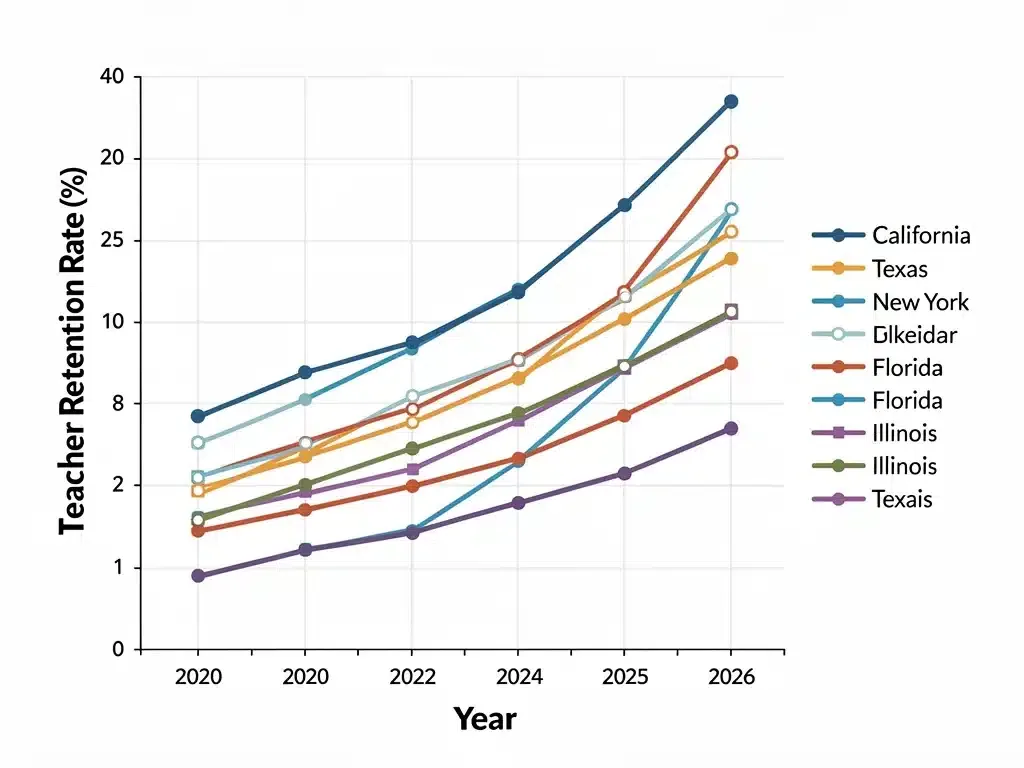
Administrators play a crucial role in shaping school culture by fostering open communication, promoting collaborative decision-making, and acknowledging teacher contributions. Their leadership directly impacts the daily experience of educators.
Addressing Workload and Administrative Burdens
Excessive workload and administrative tasks frequently contribute to teacher burnout and attrition. Educators often spend significant time on non-instructional duties, diverting attention from their primary role of teaching.
<br>
Successful retention programs are actively seeking ways to streamline administrative processes and reduce unnecessary burdens. This allows teachers to dedicate more energy to lesson planning, student engagement, and professional growth, which is vital for Boosting Teacher Retention: A 2026 Analysis of Successful Programs Across the United States.
Initiatives such as providing additional support staff for clerical tasks or simplifying reporting requirements have been shown to free up valuable teacher time. These practical adjustments can make a substantial difference in daily job satisfaction.
Strategic Resource Allocation
Effective resource allocation can significantly alleviate workload pressures. This involves providing teachers with up-to-date technology, adequate classroom supplies, and access to specialized support services for students.
When teachers feel they have the tools and support needed to succeed, their sense of efficacy and job satisfaction increases. This strategic approach is integral to Boosting Teacher Retention: A 2026 Analysis of Successful Programs Across the United States.
Investing in curriculum resources that reduce prep time.
Providing technology tools for efficient grading and communication.
Hiring additional counselors or social workers to support student needs.
Ensuring manageable class sizes to allow for individualized attention.
Furthermore, involving teachers in decisions regarding resource allocation can lead to more relevant and effective solutions, fostering a sense of ownership and empowerment within the school community.
Community and Parental Engagement
Strong community and parental engagement can significantly enhance a teacher’s sense of support and connection to their school. When parents and the wider community are actively involved, it creates a more collaborative and positive educational ecosystem.
Programs that facilitate effective communication and partnership between schools and families contribute to a more harmonious environment. This collective effort is instrumental in Boosting Teacher Retention: A 2026 Analysis of Successful Programs Across the United States.
Teachers feel more supported when they know parents are invested in their children’s education and are willing to work together. This shared responsibility can alleviate some of the pressures on educators, fostering a more collaborative atmosphere.
Building Strong Partnerships
Initiatives like parent-teacher associations, community volunteer programs, and school-based events strengthen the bond between schools and their communities. These platforms allow for mutual understanding and shared goals.
When teachers see themselves as part of a larger, supportive network, their commitment to the school and its mission often deepens. Such partnerships are fundamental for Boosting Teacher Retention: A 2026 Analysis of Successful Programs Across the United States.
Regular parent-teacher conferences and communication channels.
Community partnerships offering resources and experiential learning.
Volunteer programs to assist with classroom activities or school events.
Family literacy and engagement nights promoting shared learning.
These partnerships not only benefit teachers but also create a more robust support system for students, leading to improved academic and social outcomes across the board.
Policy Reforms and Systemic Support
Beyond individual school initiatives, broader policy reforms at state and national levels play a crucial role in teacher retention. Systemic changes can create a more stable and attractive profession for current and prospective educators.
Policies addressing teacher licensing, certification, and pathways to leadership are essential for long-term stability. These reforms help standardize quality and provide clear career progression, directly impacting Boosting Teacher Retention: A 2026 Analysis of Successful Programs Across the United States.
Legislative efforts to increase education funding, reduce administrative mandates, and promote educator well-being are vital. These top-down changes provide the necessary framework for local initiatives to thrive and achieve sustained success.
State-Level Initiatives
Several states have implemented comprehensive packages of reforms aimed at improving teacher working conditions and compensation. These include grants for high-need districts and programs to attract diverse candidates.
These statewide efforts often provide the financial and regulatory backbone for local schools to develop and sustain their own retention programs. Such coordinated action is key for Boosting Teacher Retention: A 2026 Analysis of Successful Programs Across the United States.
Streamlined licensing processes and reciprocity agreements across states.
Dedicated funding for teacher housing and relocation assistance.
Programs to diversify the teacher workforce, attracting more male teachers and teachers of color.
State-funded professional learning networks and mentorship programs.
The effectiveness of these policies is continually being evaluated, with successful models informing future legislative efforts aimed at strengthening the teaching profession.
Technology Integration and Support
The strategic integration of technology can significantly impact teacher workload, instructional effectiveness, and overall job satisfaction. Providing teachers with access to modern tools and adequate training is crucial.
Technology can automate routine tasks, enhance lesson delivery, and offer new avenues for professional collaboration. This modernization is a key element in Boosting Teacher Retention: A 2026 Analysis of Successful Programs Across the United States.
Schools that invest in robust IT infrastructure and offer continuous tech support enable teachers to leverage these tools effectively, reducing frustration and increasing efficiency. This forward-thinking approach prepares educators for the demands of the 21st-century classroom.

From interactive whiteboards to learning management systems, technology can transform the teaching experience. When implemented thoughtfully, it empowers teachers and enhances student engagement.
Future Outlook and Emerging Trends in 2026
Looking ahead to 2026, the landscape of teacher retention is expected to evolve further, with a greater emphasis on personalized support and data-driven interventions. The insights gained from current successful programs will shape future strategies.
Emerging trends include the increased use of artificial intelligence in administrative tasks, freeing up teachers for more direct instruction and student interaction. There’s also a growing recognition of teacher voice in policy-making, ensuring that solutions are grounded in real-world experience.
The goal remains consistent: to create a sustainable and attractive profession that draws and keeps the best educators. Continuous evaluation and adaptation of programs will be essential for long-term success in Boosting Teacher Retention: A 2026 Analysis of Successful Programs Across the United States.
Key Program Area | Impact on Retention |
|---|---|
Competitive Compensation | Directly reduces financial stress, increasing job satisfaction and commitment. |
Strong Mentorship | Supports new teachers, easing transition and reducing early career attrition. |
Positive School Culture | Fosters a supportive environment, enhancing well-being and reducing burnout. |
Reduced Workload | Allows teachers to focus on instruction, improving efficacy and satisfaction. |
Frequently Asked Questions About Teacher Retention
What are the primary drivers of teacher attrition in the US?▼
Primary drivers include inadequate compensation, heavy workload, lack of administrative support, and poor school culture. These factors often lead to burnout, especially among early-career educators, necessitating comprehensive solutions for Boosting Teacher Retention: A 2026 Analysis of Successful Programs Across the United States.
How do mentorship programs contribute to teacher retention?▼
Mentorship programs provide crucial guidance and emotional support to new teachers, helping them navigate initial challenges. This personalized assistance builds confidence, reduces isolation, and significantly increases the likelihood that new educators will remain in the profession long-term.
What role does school culture play in keeping teachers?▼
A positive school culture, characterized by supportive leadership, collaboration, and respect, is vital. It creates an environment where teachers feel valued and heard, reducing stress and fostering a sense of belonging, which is key for Boosting Teacher Retention: A 2026 Analysis of Successful Programs Across the United States.
Are financial incentives effective for Boosting Teacher Retention: A 2026 Analysis of Successful Programs Across the United States?▼
Yes, competitive salaries, housing assistance, and performance bonuses are highly effective. They alleviate financial pressures, allowing teachers to focus on their work without constant economic worry, thereby increasing job satisfaction and commitment to the profession.
What emerging trends will impact teacher retention by 2026?▼
By 2026, trends include increased use of AI for administrative tasks, greater teacher involvement in policy-making, and a focus on personalized professional development. These aim to streamline workflows and empower educators, further enhancing efforts for Boosting Teacher Retention: A 2026 Analysis of Successful Programs Across the United States.
Looking Ahead
The comprehensive 2026 analysis of successful programs for Boosting Teacher Retention: A 2026 Analysis of Successful Programs Across the United States reveals a clear path forward.
Continued investment in competitive compensation, robust professional development, and supportive school environments will be paramount.
Stakeholders must remain vigilant, adapting strategies to evolving needs and ensuring that the teaching profession remains attractive and sustainable for future generations of educators. The data underscores the importance of a holistic approach to address this complex challenge effectively.
To examine innovative structural approaches and recruitment initiatives, read the report on how 3-Year Degrees Could Boost the Teacher Pipeline.