Dorama Accessibility in US: 10-Year Evolution by 2026
Anúncios
Over the past decade, Japanese and Asian television dramas have transitioned from underground fan-subtitled file shares to front-page features on major Western streaming platforms.
Evolution of Dorama Accessibility charts how passionate grassroots communities forced industry leaders to legitimize, license, and expand dorama distribution for American audiences.
The Dawn of Fan Subbing: A Grassroots Movement
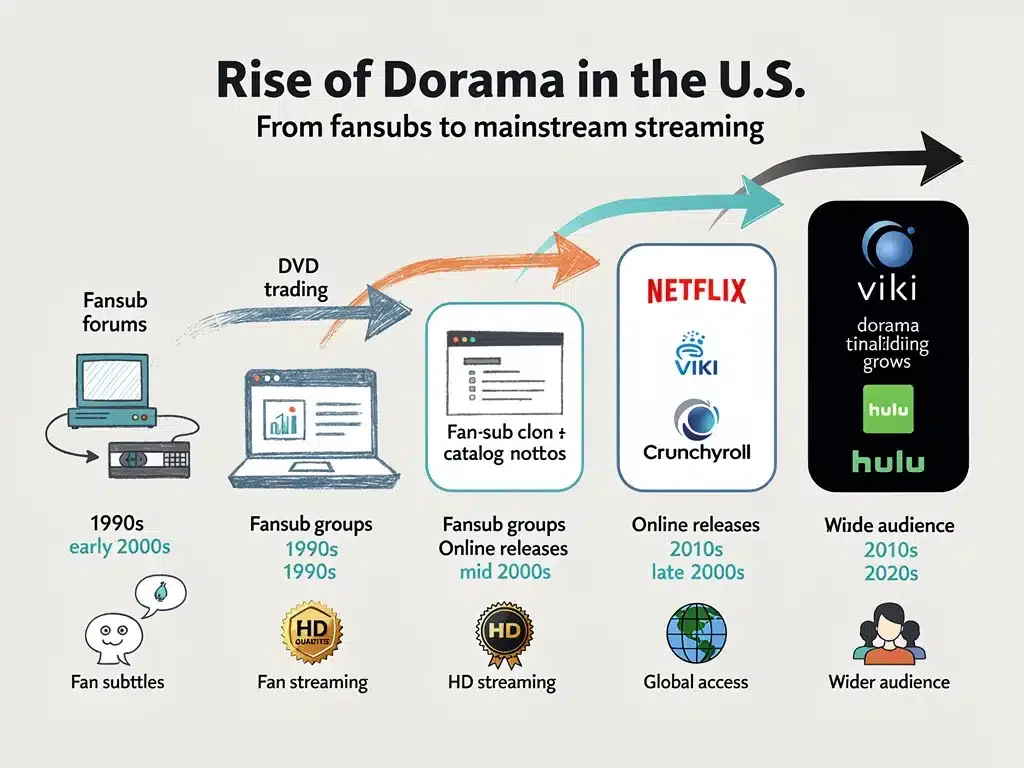
Before the advent of major streaming platforms, the primary gateway for US audiences to access doramas was through fan-subtitled videos.
Dedicated volunteers meticulously translated and timed subtitles, often directly from raw Japanese, Korean, or Chinese broadcasts.
This grassroots movement was fueled by a passionate desire to share beloved content that was otherwise unavailable in the West.
Anúncios
These early efforts, while unofficial, laid the groundwork by cultivating a loyal and growing audience, proving the existence of a significant market for Asian dramas.
The commitment of fan subbers not only provided access but also fostered a vibrant online community, where viewers discussed episodes, shared cultural insights, and collectively championed the genre.
This collective enthusiasm was a critical, albeit informal, market indicator that would eventually attract commercial interest.
Technological Leaps and Global Streaming Platforms
The rapid advancements in internet speeds and streaming technology played a pivotal role in accelerating the shift towards official dorama accessibility in the US.
The rise of platforms like Netflix, Hulu, Viki, and Crunchyroll provided the infrastructure necessary for legal content distribution.
These platforms began to recognize the untapped potential of Asian dramas, investing in licensing agreements and professional translation services.
This marked a turning point, moving away from the often inconsistent quality of fan subs to a more polished and reliable viewing experience.
Anúncios
The competitive streaming landscape further incentivized platforms to diversify their content libraries, making doramas an attractive option to capture new subscribers and cater to an increasingly globalized audience.
This strategic expansion significantly boosted Dorama Accessibility US.
Early Adopters and Niche Platforms
Platforms like Viki and Crunchyroll were among the first to successfully bridge the gap between fan communities and official distribution.
Viki, in particular, leveraged a community translation model, albeit with professional oversight, to quickly subtitle vast libraries of content.
Crunchyroll, initially known for anime, steadily expanded its dorama offerings, recognizing the overlapping interests of its audience.
These platforms served as crucial incubators, proving the commercial viability of Asian dramas before larger players entered the market.
- Viki’s community-driven translation model
- Crunchyroll’s expansion beyond anime into doramas
- Early licensing deals setting industry precedents
Mainstream Integration and Content Acquisition
The entry of giants like Netflix and Hulu dramatically changed the game, propelling doramas into mainstream consciousness.
Their significant financial resources allowed for aggressive content acquisition, securing exclusive rights to popular titles.
Netflix’s investment in original Korean dramas, such as “Kingdom” and “Squid Game,” not only garnered critical acclaim but also introduced millions of new viewers to the genre.
This move solidified the position of Asian dramas as global entertainment powerhouses.
Hulu, similarly, expanded its library with a focus on Japanese and Korean content, often partnering with local distributors.
This mainstream integration ensured that Dorama Accessibility US reached an unprecedented scale, moving far beyond its initial niche.
The Impact on Quality and Professionalization
The transition from fan subs to official releases brought about a significant improvement in the overall quality of dorama consumption.
Professional subtitling, often reviewed by native speakers, minimized errors and enhanced viewer comprehension.
Official releases also meant higher video resolution, better audio quality, and reliable streaming infrastructure, eliminating the technical glitches often associated with fan-uploaded content.
This professionalization elevated the viewing experience to match Western productions.
Furthermore, official distribution often includes proper localization efforts, such as accurate cultural notes and glossary explanations, enriching the viewer’s understanding.
This commitment to quality has been a key factor in the sustained growth of Dorama Accessibility US.
Enhanced Subtitle Accuracy and Cultural Nuance
Professional subtitling teams bring linguistic expertise and cultural understanding that fan subbers, however dedicated, sometimes lacked.
This results in more accurate translations that capture the subtle nuances and idioms of the original language.
Official subtitles are also subject to rigorous quality control processes, ensuring consistency and readability across episodes and series. This attention to detail significantly improves the immersive experience for non-native speakers.
The inclusion of cultural context, such as explanations for honorifics, traditional foods, or social customs, helps American audiences better appreciate the storytelling.
This depth of understanding is a hallmark of the professionalization of Dorama Accessibility US.
Improved Video and Audio Standards
Fan-subbed content often originated from ripped broadcasts or low-resolution files, leading to compromised video and audio quality.
Official streaming, by contrast, provides high-definition and even 4K resolution, with crisp, clear sound.
These technical improvements are critical for viewer engagement, offering a premium entertainment experience comparable to any domestic production.
The visual and auditory fidelity allows viewers to fully appreciate the cinematography and sound design of doramas.
Reliable streaming infrastructure also means fewer buffering issues and smoother playback, contributing to a seamless viewing experience. This technical superiority is a core component of the appeal of official Dorama Accessibility US.
The Role of Social Media and Fandom
Social media platforms have played an indispensable role in amplifying the reach and popularity of doramas in the US.
Online communities on Twitter, TikTok, Reddit, and Instagram serve as hubs for discussion, recommendations, and fan engagement.
The viral spread of clips, memes, and fan theories has introduced countless new viewers to the genre, transforming casual interest into dedicated fandom.
Social media platforms act as powerful marketing tools, generating organic buzz around new releases.
This dynamic interplay between official distribution and enthusiastic online communities has been a driving force behind the continued expansion of Dorama Accessibility US, fostering a sense of shared experience among viewers.
Community Building and Engagement
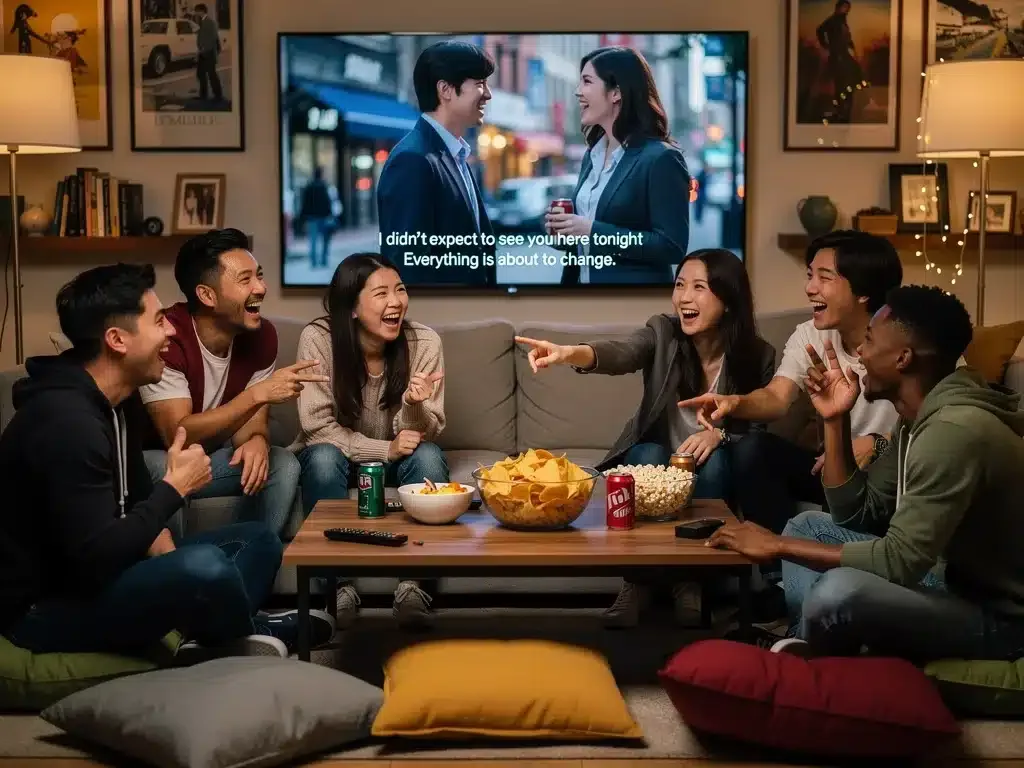
Online forums and social media groups provide spaces for dorama fans to connect, share their opinions, and celebrate their favorite shows. These communities often organize watch parties, discussions, and even fan-created content.
The ability to instantly react to episodes and engage with fellow fans enhances the overall viewing experience, transforming it from a solitary activity into a communal one.
This strong sense of community fosters loyalty and encourages continued exploration of the genre.
- Dedicated subreddits for specific doramas
- Viral discussions on Twitter and TikTok
- Fan art and creative content generation
Influencer Marketing and Global Trends
The rise of dorama-focused influencers on platforms like YouTube and TikTok has further boosted their visibility.
These content creators review shows, offer recommendations, and provide cultural insights, guiding new viewers through the vast dorama landscape.
The global nature of social media means that trends originating in Asia can quickly gain traction in the US, creating a ripple effect that drives demand for specific titles.
This accelerated cultural exchange benefits Dorama Accessibility US significantly.
For instance, the global phenomenon of K-pop has often served as a gateway for fans to discover K-dramas, illustrating the interconnectedness of various aspects of Hallyu (Korean Wave) and its impact on Western audiences.
Challenges and Opportunities for Future Growth
Despite significant progress, the journey for Dorama Accessibility US is not without its challenges. Licensing complexities, regional restrictions, and the sheer volume of content being produced globally require ongoing strategic navigation.
However, these challenges also present opportunities for innovation, particularly in areas like AI-driven translation, personalized recommendations, and interactive viewing experiences.
The market continues to evolve, demanding adaptability from platforms and content creators.
Understanding these dynamics is crucial for predicting the next phase of growth and ensuring that accessibility continues to expand, reaching even broader and more diverse audiences across the United States.
Navigating Licensing and Regional Rights
One of the persistent challenges in expanding Dorama Accessibility US is the intricate web of licensing agreements and regional rights.
Content ownership often varies by country, leading to situations where a dorama available in one region is not accessible in another.
Streaming platforms must negotiate complex deals with multiple production companies and broadcasters, a process that can be time-consuming and costly.
This fragmentation can frustrate viewers and limit the immediate availability of new titles.
However, as the global market for doramas grows, there is an increasing trend towards more standardized global licensing, which could streamline distribution in the coming years, further enhancing Dorama Accessibility US.
The Rise of AI and Machine Learning in Translation
The future of dorama accessibility may heavily rely on advancements in artificial intelligence and machine learning for translation.
While human translation remains superior for nuance, AI can offer rapid, cost-effective initial translations.
Hybrid models, combining AI-generated translations with human editing, could significantly speed up the subtitling process, allowing doramas to reach international audiences almost simultaneously with their original broadcast.
This would be a game-changer for Dorama Accessibility US.
Furthermore, AI could power more sophisticated recommendation engines, tailoring content suggestions to individual viewer preferences, thereby enhancing discovery and engagement with the vast library of available doramas.
Looking Ahead to 2026 and Beyond
By 2026, the landscape of Dorama Accessibility US is expected to be almost unrecognizable from a decade prior.
Official releases will be the norm, with a high degree of integration into mainstream streaming services, offering a vast array of choices.
The competition among platforms will likely drive further investment in original Asian content and exclusive licensing deals, ensuring a steady stream of new and diverse doramas for American viewers.
This sustained growth will cement doramas as a staple of US entertainment.
Moreover, technological innovations, coupled with evolving consumer habits, will continue to shape how these dramas are consumed, potentially leading to interactive elements or even metaverse-integrated experiences.
The future for Dorama Accessibility US looks exceptionally bright and dynamic.
| Key Point | Brief Description |
|---|---|
| Fan Subbing Origins | Grassroots efforts by fans to translate and share doramas, building initial US demand. |
| Streaming Platform Growth | Major streaming services like Netflix, Viki, and Hulu invested in official dorama licensing. |
| Quality Enhancement | Professional subtitling, higher resolution, and better audio quality became standard. |
| Future Outlook | Continued expansion, AI integration, and diverse content offerings for Dorama Accessibility US. |
Frequently Asked Questions About Dorama Accessibility in the US
How has dorama accessibility in the US changed over the last decade?▼Over the past decade, dorama accessibility shifted from being primarily reliant on fan-subtitled content to widespread official releases on major streaming platforms. This evolution has significantly increased the variety and quality of available Asian dramas for American audiences, making them a mainstream entertainment option.
What role did fan subbing play in this evolution?▼Fan subbing was crucial in cultivating an initial audience and demonstrating significant demand for doramas in the US. These grassroots efforts proved the market’s potential, ultimately paving the way for official distributors to invest in licensing and professional translation services, expanding Dorama Accessibility US.
Which streaming platforms are most important for dorama accessibility in the US?▼Platforms like Netflix, Viki, Hulu, and Crunchyroll are key players in providing dorama accessibility in the US. Netflix has invested heavily in original content, while Viki and Crunchyroll have focused on extensive libraries and community engagement, all contributing to broader availability.
What are the main benefits of official dorama releases compared to fan subs?▼Official releases offer superior quality, including professional, accurate subtitles, high-definition video, and reliable streaming. They also provide proper cultural context and support the creators legally, enhancing the overall viewing experience and ensuring sustained Dorama Accessibility US.
What does the future hold for dorama accessibility in the US by 2026 and beyond?▼By 2026, dorama accessibility is expected to be fully integrated into mainstream entertainment, with continued growth in official releases and original content. AI-driven translation and personalized recommendations will likely enhance discovery and accessibility further, solidifying doramas’ place in the US market.
Perspectives
The journey of From Fan Subs to Official Releases: The 10-Year Evolution of Dorama Accessibility in the US by 2026 underscores a significant cultural shift.
It highlights the power of dedicated fan bases to drive market demand and the strategic foresight of streaming platforms to capitalize on global content.
The professionalization of dorama distribution has not only addressed legal and quality concerns but also expanded the genre’s appeal far beyond its initial niche.
To explore academic research on global media flows, platformization, and international content distribution, read this paper on socio-economic research and digital media trends.
As we move towards 2026, the focus will likely be on even deeper integration, more localized marketing, and potentially new interactive viewing experiences.
The sustained growth of Dorama Accessibility US is a clear indicator that the appetite for diverse, high-quality international storytelling remains strong.
This evolution serves as a blueprint for how other foreign media might successfully penetrate and thrive in the American entertainment market.
What began as a labor of love by fans has transformed into a robust industry, demonstrating that cultural barriers can be effectively overcome through technology, strategic investment, and a genuine appreciation for global narratives.
The future promises an even richer and more accessible landscape for dorama enthusiasts across the United States.