Housing Market Trends: Median Home Prices Up 6% Nationally Q1 2026
Anúncios
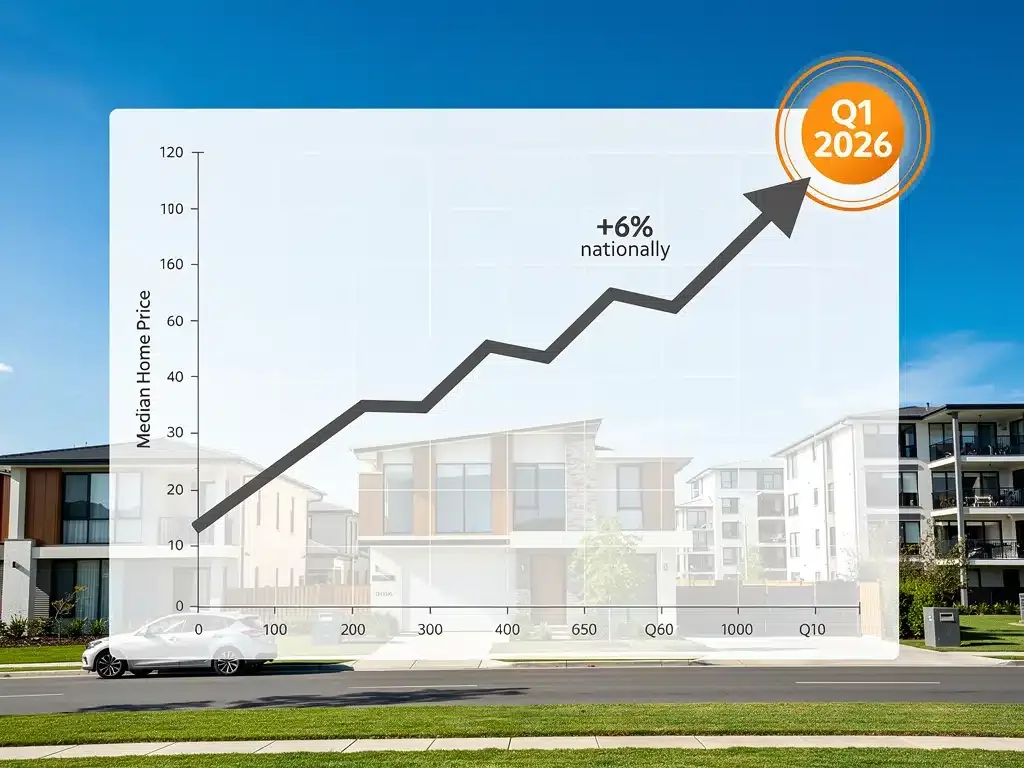
As we move through March 2026, the real estate landscape is shifting from the high-volatility “pandemic era” into what economists are calling the “Great Housing Reset.”
According to the California Association of REALTORS® (C.A.R.), the market is finally finding its footing with a projected 2.0% increase in single-family home sales and a modest 3.6% rise in the median home price, reaching a new record of $905,000 in California.
Nationally, the story is one of gradual stabilization. Major institutions like J.P. Morgan and NAR project that home prices will stall or grow at a minimal 0% to 2% rate this year.
This “plateau” is a welcome sign for buyers, as wage growth is finally expected to outpace home price appreciation for the first time in years, beginning to heal the affordability gap.
Understanding the 2026 Stabilization Forecast
Leading economists and real estate analysts have converged on a notable prediction for the U.S. housing market: a 5% stabilization in home prices nationally by 2026.
Anúncios
This forecast represents a significant shift from the volatile patterns of recent years, offering a clearer outlook for future investments.
This anticipated stability is not merely a statistical projection but reflects a complex interplay of economic factors, demographic shifts, and policy adjustments.
It suggests a more balanced market where extreme fluctuations might become less common, providing a more predictable environment for all participants.
The 2026 outlook indicates that while prices may not see the dramatic surges of the past, they are also unlikely to experience sharp declines. Instead, a steady, manageable growth rate is expected, fostering greater confidence and long-term planning.
Key Economic Drivers Behind the Stabilization
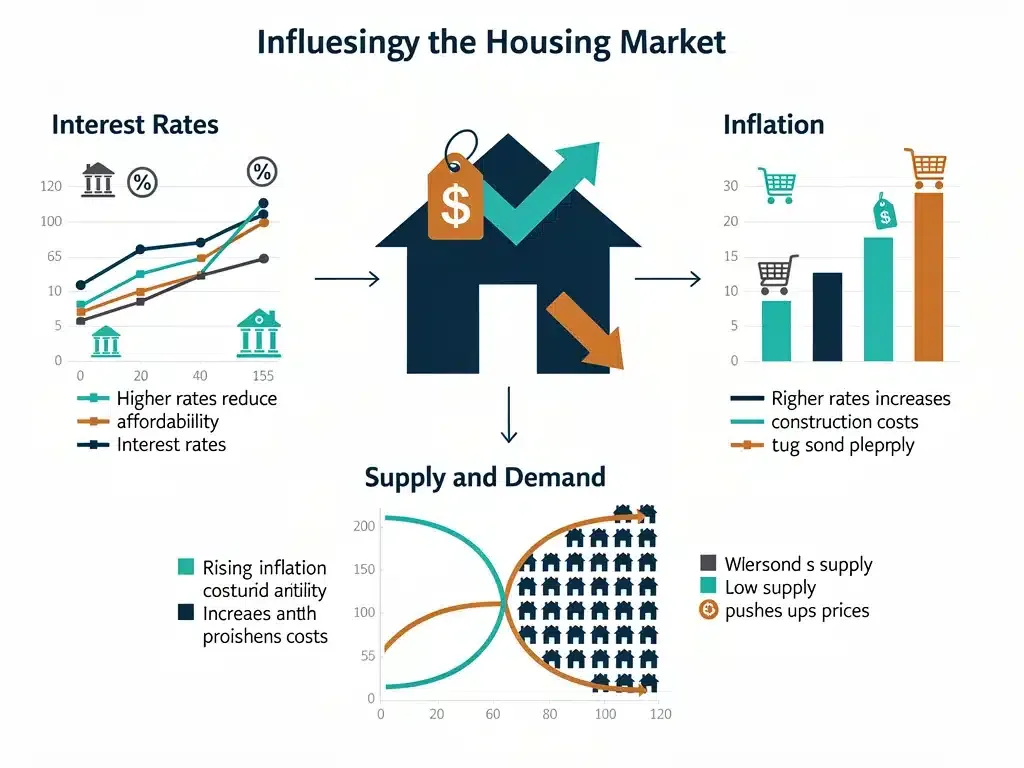
Several critical economic drivers are underpinning the Housing Market Forecast for 2026. Interest rates, inflation trends, and employment figures are all playing pivotal roles in shaping this anticipated period of stability.
Understanding these factors is essential for grasping the broader market dynamics.
Federal Reserve policies, particularly regarding benchmark interest rates, profoundly influence mortgage rates, directly impacting buyer affordability and market demand.
Anúncios
A more predictable rate environment can contribute significantly to price stabilization, as borrowing costs become more manageable for consumers.
Inflation, while a concern, is also expected to moderate, helping to stabilize construction costs and consumer purchasing power.
A robust employment market, coupled with steady wage growth, continues to fuel demand, preventing any significant downturns in the housing sector.
Interest Rates and Their Impact
The trajectory of interest rates remains a primary determinant for the housing market’s health. Analysts suggest that a more stable interest rate environment will be crucial for the 5% stabilization in home prices by 2026, easing the pressure on buyers.
Fluctuations in mortgage rates directly affect affordability, influencing the volume of transactions and, consequently, price movements.
A period of relative calm in rates could encourage more consistent buyer activity, supporting the projected stability.
Inflation and Construction Costs
Inflationary pressures have significantly impacted housing affordability and construction costs in recent times.
The expectation of moderating inflation is a key component of the Housing Market Forecast for 2026, contributing to a more predictable supply side.
Reduced volatility in material and labor costs allows builders to plan more effectively, potentially increasing housing supply. This increased supply, combined with stable demand, is vital for achieving the projected price stabilization.
Regional Variations and Local Market Insights
While the national Housing Market Forecast for 2026 predicts a 5% stabilization, it is crucial to recognize that real estate is inherently local.
Regional variations will undoubtedly persist, with some areas experiencing stronger growth and others seeing more modest adjustments.
Factors such as local job markets, population shifts, and housing inventory will continue to create diverse landscapes across the U.S.
Metropolitan areas with booming tech sectors or strong population inflows may still witness above-average appreciation, albeit at a slower pace than in previous years.
Conversely, regions with slower economic growth or an abundance of new construction might experience a flatter price trajectory, or even slight corrections in specific submarkets.
Understanding these localized dynamics is vital for both buyers and sellers, as a national average can sometimes mask significant disparities.
Prospective homeowners and investors should conduct thorough research into their specific target markets to make informed decisions tailored to local conditions.
West Coast Dynamics
The West Coast housing markets, traditionally characterized by high demand and limited supply, are expected to temper their rapid price growth.
While still robust, the pace of appreciation is likely to align more closely with the national 5% stabilization by 2026.
Factors such as tech industry performance, remote work trends, and evolving state housing policies will continue to shape these markets. Affordability challenges might persist, but the intensity of price surges is projected to diminish.
Southern States Expansion
Many Southern states continue to attract significant population migration, fueling strong housing demand. The Housing Market Forecast for 2026 suggests these regions will likely maintain healthy, but more stabilized, growth rates.
Affordability and a favorable business climate remain key draws, contributing to sustained buyer interest. New construction activity in these areas will be critical in meeting demand and supporting price stabilization.
Impact on Buyers and Sellers
The anticipated 5% stabilization in home prices by 2026 has distinct implications for both prospective buyers and current sellers.
For buyers, this period could offer a more predictable environment, potentially reducing the intense bidding wars and rapid price escalations seen in recent years. It may allow for more thoughtful decision-making and a stronger negotiating position.
Sellers, on the other hand, might need to adjust their expectations from the peak market conditions of the past.
While prices are projected to remain stable or grow modestly, the era of guaranteed double-digit appreciation might be behind us. Strategic pricing and effective marketing will become even more crucial in a balanced market.
Overall, this forecast suggests a shift towards a healthier, more sustainable housing market, benefiting those looking for long-term investments rather than quick gains.
It encourages a focus on fundamental value and sustainable growth, which is a positive development for the broader economy.
The Role of Housing Inventory and Supply

The level of housing inventory plays a fundamental role in achieving the projected 5% stabilization in home prices by 2026.
A balanced supply of homes for sale is crucial to meet buyer demand without triggering excessive price increases or sharp declines. Currently, many markets still grapple with insufficient housing stock.
New construction, although facing challenges like labor shortages and material costs, is essential for replenishing inventory.
Policies that encourage efficient development and address zoning restrictions can significantly contribute to increasing the housing supply, thereby fostering greater market stability.
The interplay between existing home sales and new home construction will be a key determinant of whether the market achieves the forecasted stabilization.
A sustained effort to boost supply across various price points is necessary to accommodate evolving demographic needs and maintain a healthy market balance.
Addressing Supply Shortages
Persistent housing supply shortages have been a significant driver of price appreciation in recent years.
For the Housing Market Forecast for 2026 to hold true, a concerted effort to address these imbalances is paramount, requiring cooperation between developers and local governments.
Increased construction of single-family homes and multi-family units will help alleviate pressure on existing inventory. Streamlined permitting processes and incentives for affordable housing development are key strategies to enhance supply.
Impact of New Construction
The volume and pace of new home construction directly influence market equilibrium.
A steady flow of new homes coming onto the market can absorb buyer demand and prevent prices from escalating unsustainably, aligning with the 5% stabilization forecast.
New homes also often incorporate modern features and energy efficiency, appealing to a segment of buyers. This contributes to a diverse housing stock and helps to spread demand across various property types and price points.
Government Policies and Regulatory Influence
Government policies and regulatory frameworks wield considerable influence over the U.S. housing market, and their role will be pivotal in shaping the 5% stabilization in home prices by 2026.
Federal, state, and local initiatives related to zoning, affordable housing, and lending standards all impact market dynamics. Changes in these areas can either facilitate or hinder the path to stability.
For instance, policies aimed at increasing housing density or reducing bureaucratic hurdles for builders can significantly boost supply, directly supporting price stabilization.
Conversely, overly restrictive regulations can exacerbate supply shortages, contributing to upward price pressure.
Additionally, government-backed mortgage programs and financial regulations play a crucial role in maintaining access to credit and ensuring responsible lending practices.
These measures help to prevent market overheating and safeguard against potential financial instability, aligning with a stable Housing Market Forecast for 2026.
Expert Consensus and Future Outlook
The consensus among leading real estate experts and economists regarding the 5% stabilization in home prices by 2026 reflects a cautious optimism for the future of the U.S. housing market.
This outlook is built upon a comprehensive analysis of current economic trends, historical data, and projected demographic shifts. While no forecast is absolute, the convergence of expert opinions provides a strong indication of the likely trajectory.
Analysts anticipate a move away from the extreme highs and lows seen in recent years, towards a more predictable and sustainable growth pattern.
This stability is expected to foster greater confidence among both consumers and investors, encouraging long-term engagement with the housing sector.
The future outlook points to a maturing market where fundamental economic principles, rather than speculative fervor, will drive value.
This shift is generally viewed as a healthy development, promoting responsible homeownership and investment strategies in line with the Housing Market Forecast for 2026.
| Key Point | Brief Description |
|---|---|
| National Home Price Stabilization | Experts predict a 5% stabilization in U.S. home prices by 2026, moving away from past volatility. |
| Economic Drivers | Interest rates, inflation moderation, and strong employment are crucial for market stability. |
| Regional Variations | Local markets will differ; some areas may see stronger growth, others more modest adjustments. |
| Supply and Policy Impact | Increased housing inventory and favorable government policies are vital for sustained stability. |
Frequently Asked Questions About the 2026 Housing Market
What does a 5% stabilization in home prices mean for me?▼A 5% stabilization suggests a more predictable market. For buyers, this means less intense competition and more time to make decisions. For sellers, it implies reasonable appreciation, but not the rapid gains of recent years, requiring strategic pricing in the Housing Market Forecast for 2026.
Will interest rates remain stable through 2026?▼While expert consensus points to a more stable interest rate environment, minor fluctuations are always possible. The overall trend is expected to support the 5% stabilization in home prices. Monitoring Federal Reserve announcements will be key to understanding the Housing Market Forecast for 2026.
How will regional markets differ from the national forecast?▼Regional markets will likely show variations based on local job growth, population shifts, and housing supply. Some high-demand areas may still see slightly higher appreciation, while others might experience slower growth. The national 5% stabilization is an average, so local research is crucial for the Housing Market Forecast for 2026.
What role does housing inventory play in this stabilization?▼Adequate housing inventory is critical. Increased new construction and streamlined regulatory processes help balance supply with demand. A healthy inventory prevents extreme price fluctuations, directly contributing to the projected 5% stabilization in home prices as part of the Housing Market Forecast for 2026.
Should I buy or sell now, given the 2026 forecast?▼The 5% stabilization suggests a less urgent market, so decisions should be based on personal financial situations and long-term goals. It’s a favorable environment for thoughtful buying and selling, rather than reacting to rapid market shifts. Consult with a real estate professional for personalized advice on the Housing Market Forecast for 2026.
Looking Ahead: Implications and Trends
The Housing Market Forecast for 2026, predicting a stabilization in home prices nationally, marks a pivotal moment for the U.S. real estate sector.
In conclusion, this shift suggests a move towards a more mature market, where sustainable growth and predictability become the norm, rather than the exception.
It is essential for all stakeholders to adapt their strategies to this evolving landscape.
This stabilization implies that while home values will continue to appreciate, the pace will be more measured and aligned with broader economic indicators.
Buyers can anticipate a less frenzied market, allowing for more informed decisions, while sellers will need to embrace realistic pricing strategies.
Monitoring key economic data, regional developments, and policy changes will be crucial in navigating this new phase of the housing market.
The 2026 outlook underscores the importance of long-term planning and a balanced approach to real estate investment and homeownership.
For a detailed breakdown of these regional trends and the latest data, you can view the official California Association of REALTORS® 2026 Housing Market Forecast.