U.S. K-Drama Genre Preferences 2026: A Quarterly Report Analysis
Anúncios
The quarterly report Comparison/Analysis: U.S. Audience Preferences for K-Drama Genres in 2026 examines the shifting consumption habits of Korean drama viewers across the United States.
This concise summary analyzes evolving genre popularity and regional streaming trends, offering key metrics for platforms and distributors looking to capitalize on shifting audience demand in the American market.
Unpacking the Latest U.S. K-Drama Viewership Trends
The first quarter of 2026 has brought forth a notable evolution in US K-Drama Preferences, according to the latest comprehensive report.
This analysis highlights that while established genres maintain their strongholds, emerging categories are rapidly gaining traction among American viewers.
Understanding these shifts is paramount for industry professionals and content creators aiming to capture this dynamic market.
Anúncios
This quarterly report offers a granular look into what drives viewership, moving beyond general popularity to specific genre appeal and demographic influences.
The findings indicate a sophisticated audience, increasingly diverse in its tastes and expectations. The Comparison/Analysis: U.S. Audience Preferences for K-Drama Genres in 2026 – A Quarterly Report serves as a vital compass.
Key indicators suggest that the American audience is becoming more adventurous, exploring a wider array of K-Drama narratives than ever before.
This expansion signifies a maturing market where content diversity and quality are increasingly valued. The report underscores the importance of adapting to these evolving preferences.
Romance and Thrillers Maintain Strong Leads
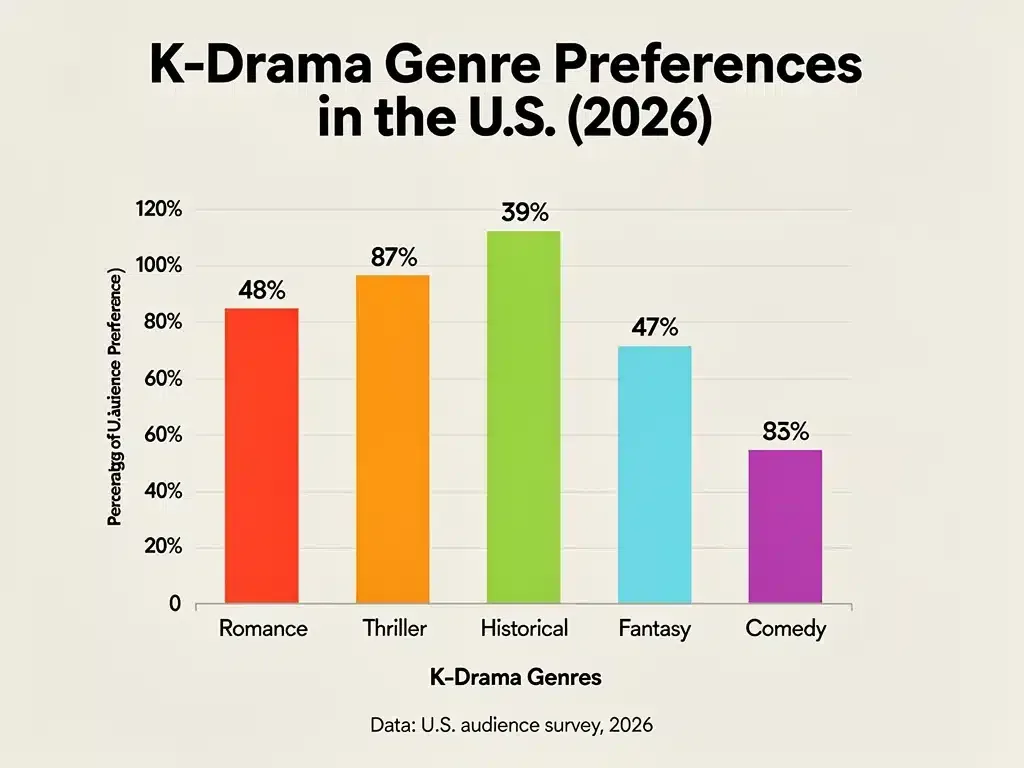
Romance and thriller genres continue to dominate the US K-Drama Preferences, consistently attracting the largest share of viewers.
Their enduring appeal can be attributed to compelling narratives, high production quality, and universally relatable themes of love, suspense, and human struggle.
These genres have become foundational to K-Drama’s success in the U.S. market.
Anúncios
The report indicates that while romantic comedies remain popular, there’s a growing inclination towards more mature and complex romantic narratives, often intertwined with elements of drama or fantasy.
Similarly, thrillers that offer intricate plots and psychological depth are outperforming simpler mystery formats. This reflects a sophisticated palate among viewers.
This sustained popularity suggests that these genres effectively tap into core human emotions and storytelling archetypes that resonate deeply with a broad American audience.
Content producers are likely to continue investing heavily in these proven formats, albeit with innovative twists.
The Comparison/Analysis: U.S. Audience Preferences for K-Drama Genres in 2026 – A Quarterly Report confirms their market dominance.
- Romantic Dramas: High engagement with complex character development.
- Psychological Thrillers: Strong preference for intricate plots and suspense.
- Fantasy Romance: Growing interest in supernatural elements combined with love stories.
Emerging Genres: Fantasy and Historical Dramas on the Rise
Beyond the traditional powerhouses, fantasy and historical K-Dramas are experiencing a significant surge in US K-Drama Preferences.
These genres offer unique storytelling elements, often rich in cultural context and imaginative world-building, which captivate viewers seeking fresh and differentiated content.
Their ascent signals a broadening of the American audience’s K-Drama horizons.
Fantasy dramas, with their intricate mythologies and stunning visual effects, provide an escapist appeal that resonates strongly with younger demographics.
Historical dramas, on the other hand, offer a blend of rich cultural immersion and epic narratives, drawing in viewers interested in both entertainment and cultural learning.
The Comparison/Analysis: U.S. Audience Preferences for K-Drama Genres in 2026 – A Quarterly Report highlights their rapid growth.
This upward trend suggests that American audiences are increasingly open to exploring narratives that deviate from contemporary settings, embracing stories rooted in historical contexts or fantastical realms.
This diversification presents new opportunities for creators and platforms to expand their offerings. The evolving US K-Drama Preferences are clearly embracing novelty.
Demographic Insights and Regional Variations
The Comparison/Analysis: U.S. Audience Preferences for K-Drama Genres in 2026 – A Quarterly Report also provides crucial demographic insights, revealing how age, gender, and geographic location influence viewing habits.
While K-Dramas generally appeal to a wide demographic, specific genre preferences often align with particular audience segments. This granularity is vital for targeted marketing and content acquisition strategies.
Younger viewers, particularly those aged 18-34, show a stronger inclination towards fantasy and school-based dramas, reflecting their desire for imaginative and relatable content.
Conversely, older demographics tend to gravitate towards more mature romantic dramas and family-oriented narratives. Understanding these demographic nuances is key to optimizing content delivery.
Furthermore, significant regional variations in US K-Drama Preferences have been identified.
For instance, coastal areas exhibit a higher engagement with experimental or indie K-Dramas, while the Midwest shows a consistent preference for feel-good romantic comedies.
These regional differences underscore the diverse cultural tapestry of the U.S. audience.
Impact of Streaming Platforms on Genre Consumption
Streaming platforms play a pivotal role in shaping US K-Drama Preferences by providing unprecedented access to a vast library of content.
Their curated recommendations and localized marketing efforts significantly influence what genres gain traction among American viewers.
The accessibility offered by these platforms has democratized K-Drama consumption, making it easier for new genres to emerge.
Major platforms like Netflix, Viki, and Kocowa are continuously expanding their K-Drama catalogs, often acquiring exclusive rights to popular series across various genres.
This competition among platforms drives both content diversity and quality, directly impacting the evolving US K-Drama Preferences.
Their algorithms also contribute to discovery, exposing viewers to genres they might not have otherwise considered.
The ease of binge-watching and the availability of subtitles have further lowered barriers to entry, encouraging viewers to explore different K-Drama genres without linguistic hurdles.
This environment fosters a dynamic viewing culture where new trends can rapidly take hold. The Comparison/Analysis: U.S. Audience Preferences for K-Drama Genres in 2026 – A Quarterly Report emphasizes this influence.
- Netflix: Broad appeal across mainstream genres, driving discovery.
- Viki: Niche focus on fan communities and diverse sub-genres.
- Kocowa: Direct access to current South Korean broadcasts, catering to dedicated fans.
The strategic partnerships between South Korean production houses and global streaming giants are also crucial in this equation.
These collaborations often lead to higher production budgets and broader international distribution, further solidifying the presence of diverse K-Drama genres in the U.S. market.
The sustained growth in US K-Drama Preferences is a testament to these synergistic efforts.
The Role of Social Media in Shaping Preferences
Social media platforms are indispensable in influencing US K-Drama Preferences, serving as powerful conduits for discussion, recommendation, and community building.
Platforms like TikTok, Twitter, and Instagram facilitate rapid dissemination of information and create viral moments that can significantly boost a drama’s popularity.
This organic buzz often translates directly into increased viewership for specific genres.
Fan communities on these platforms actively engage in discussions, share fan edits, and create memes, generating a continuous dialogue around popular K-Dramas.
This collective enthusiasm can elevate lesser-known genres or independent productions into mainstream awareness.
The Comparison/Analysis: U.S. Audience Preferences for K-Drama Genres in 2026 – A Quarterly Report recognizes this significant factor.
Influencers and content creators specializing in K-Drama reviews and reactions also play a crucial role in validating and promoting certain genres.
Their endorsements often guide new viewers towards particular types of dramas, thereby shaping collective US K-Drama Preferences. The interactive nature of social media makes it a fertile ground for trend-setting.
Challenges and Opportunities for Content Creators
While the growing popularity of K-Dramas in the U.S. presents immense opportunities, it also introduces challenges for content creators and distributors.
Meeting the diverse and evolving US K-Drama Preferences requires a nuanced understanding of audience demands and a commitment to high-quality, innovative storytelling. The market is becoming increasingly competitive, demanding excellence.
One significant challenge is the need to continuously innovate within popular genres to avoid saturation and maintain viewer engagement.
Simply replicating past successes may not suffice as audience tastes mature.
The Comparison/Analysis: U.S. Audience Preferences for K-Drama Genres in 2026 – A Quarterly Report suggests that novelty and fresh perspectives are highly valued.
Opportunities lie in exploring hybrid genres, investing in diverse narratives, and catering to specific demographic niches identified in the report.
Collaborations with international talent and leveraging advanced production techniques can also enhance appeal. Adapting to the dynamic US K-Drama Preferences is essential for sustained growth in this vibrant market.
Future Outlook for K-Drama Genres in the U.S.
Looking ahead, the Comparison/Analysis: U.S. Audience Preferences for K-Drama Genres in 2026 – A Quarterly Report projects continued diversification and sophistication in American K-Drama viewership.
The trend towards exploring a broader spectrum of genres is expected to accelerate, driven by increased accessibility and the proactive efforts of streaming platforms and content creators. This suggests a dynamic future for the industry.
We can anticipate a rise in demand for genres that blend cultural elements with universal themes, such as historical fantasy or social commentary dramas.
The American audience’s growing appreciation for nuanced storytelling and cultural depth will likely fuel this trend. This evolution in US K-Drama Preferences points towards a richer and more varied viewing experience.
Furthermore, the influence of global events and social trends may also subtly shape future preferences, with viewers potentially seeking narratives that offer escapism, reflection, or social relevance.
The continuous feedback loop between viewers and content providers will be crucial in defining these future trajectories. The report provides a baseline for monitoring these developments.
Anticipating the Next Big Genre Shift
Predicting the next major genre shift in US K-Drama Preferences is a complex task, yet the current report offers some indicators.
While romance and thrillers will likely remain strong, the rapid growth of fantasy and historical dramas suggests these categories could expand significantly, potentially even spawning new sub-genres.
The market is ripe for innovation and unexpected hits.
There’s also a burgeoning interest in slice-of-life and healing dramas, which offer comfort and relatable human experiences.
While not yet as dominant, their steady growth indicates a segment of the audience seeking more grounded and emotionally resonant content. This niche could evolve into a more prominent trend in the coming quarters, impacting overall US K-Drama Preferences.
Content creators are advised to monitor trends in other global entertainment markets and cross-cultural collaborations, as these often foreshadow shifts in American viewing habits.
The global interconnectedness of entertainment means that innovation in one region can quickly influence another. The Comparison/Analysis: U.S. Audience Preferences for K-Drama Genres in 2026 – A Quarterly Report provides a framework for this anticipation.
- Healing Dramas: Increasing popularity for comfort and emotional solace.
- Hybrid Genres: Blending elements of different genres for fresh narratives.
- Social Commentary: Growing interest in dramas addressing contemporary issues.
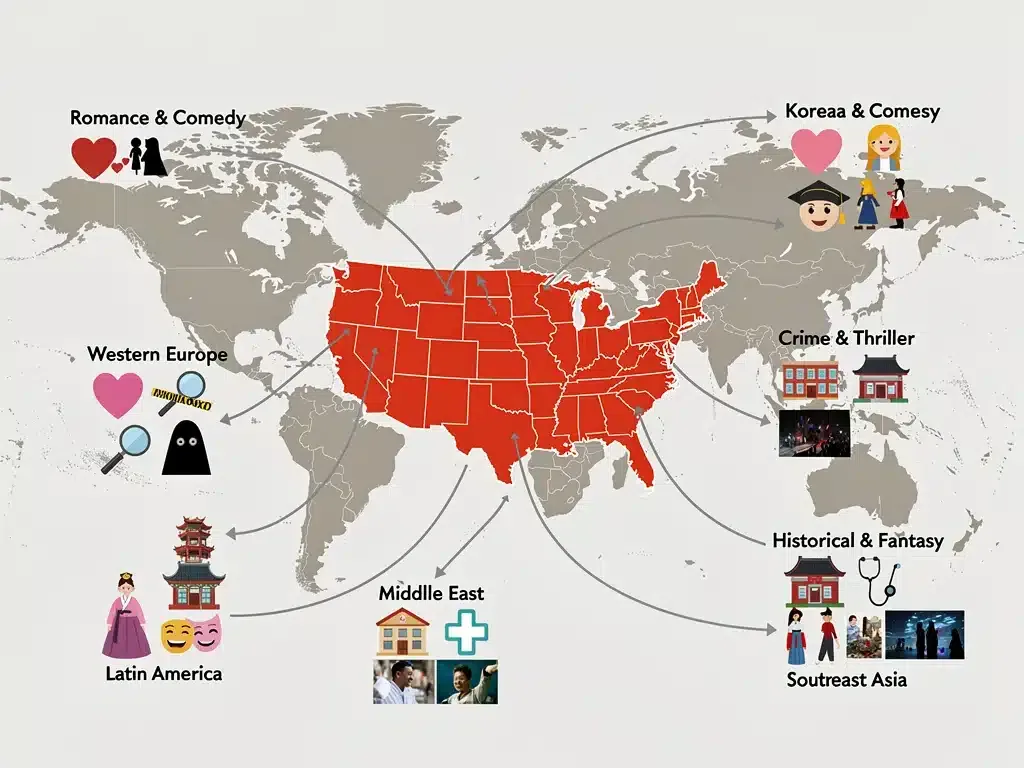
The continuous innovation within the K-Drama industry itself, coupled with the expanding global reach of South Korean culture, will continue to introduce new genres and storytelling formats to the U.S. market.
This dynamic environment ensures that US K-Drama Preferences will remain a fascinating area of study and a lucrative opportunity for those who can accurately predict and cater to evolving tastes.
| Key Finding | Brief Description |
|---|---|
| Genre Dominance | Romance and thriller genres continue to lead U.S. K-Drama viewership. |
| Emerging Popularity | Fantasy and historical dramas show significant growth in audience preference. |
| Demographic Influence | Age and region distinctly shape specific K-Drama genre choices. |
| Platform Impact | Streaming services significantly drive content discovery and viewership trends. |
Frequently Asked Questions about US K-Drama Preferences
What are the most popular K-Drama genres in the U.S. in 2026?▼According to the latest Comparison/Analysis: U.S. Audience Preferences for K-Drama Genres in 2026 – A Quarterly Report, romance and thriller genres continue to be the most popular among U.S. audiences. These genres consistently attract a large viewership due to their compelling narratives and high production quality, maintaining their strong lead in the market.
Which K-Drama genres are gaining popularity in the U.S.?▼Fantasy and historical K-Dramas are experiencing significant growth in popularity among U.S. viewers. These emerging genres offer unique storytelling, rich cultural contexts, and imaginative world-building, appealing to audiences seeking fresh and diverse content. This shift indicates a broadening of US K-Drama Preferences.
How do streaming platforms influence U.S. K-Drama preferences?▼Streaming platforms like Netflix, Viki, and Kocowa are crucial in shaping US K-Drama Preferences by providing extensive access to diverse content. Their curated recommendations, localized marketing, and exclusive acquisitions significantly influence which genres become popular, driving content diversity and expanding viewer horizons.
Are there regional differences in K-Drama preferences across the U.S.?▼Yes, the report indicates notable regional variations in US K-Drama Preferences. For example, coastal areas tend to favor more experimental or indie K-Dramas, while the Midwest shows a consistent preference for romantic comedies. These differences highlight the diverse cultural landscape influencing viewing habits across the United States.
What does the future hold for K-Drama genres in the U.S. market?▼The future outlook for K-Drama genres in the U.S. predicts continued diversification and sophistication in audience tastes. The trend towards exploring a wider array of genres, including hybrid and niche categories, is expected to accelerate. This dynamic evolution in US K-Drama Preferences will be driven by ongoing innovation and accessibility.
What this means
The detailed Comparison/Analysis: U.S. Audience Preferences for K-Drama Genres in 2026 – A Quarterly Report underscores a dynamic and evolving landscape for Korean dramas in the American market.
It signifies a maturation of audience tastes, moving beyond initial curiosity to a deeper appreciation for diverse storytelling and cultural nuances. This report provides a critical benchmark for stakeholders.
Understanding these shifts is not merely academic; it has direct implications for content production, acquisition strategies, and marketing efforts.
The continued growth of K-Drama viewership in the U.S. signals a robust market with significant untapped potential. The US K-Drama Preferences are clearly becoming more complex and varied.
Moving forward, industry players must remain agile, responsive to emerging trends, and committed to delivering high-quality, innovative content to sustain and expand this engagement.
The data from this report will be instrumental in guiding these strategic decisions, ensuring that K-Dramas continue to captivate U.S. audiences.
The shifts in US K-Drama Preferences are a key indicator of market health, highlighting a foundational trend where Korean drama lovers in the US remain incredibly fond of romantic comedies, which continue to anchor the market even as viewer tastes diversify into other complex genres.