2026 Energy Outlook: Renewable Sources Powering US Grid Growth
Anúncios
The “2026 Energy Outlook: Renewable Sources Expected to Power 30% of US Grid” marks a pivotal shift, representing a 5% increase in clean energy capacity since 2025.
This transition is being driven by rapid technological advancements, strategic investments, and a growing national demand for sustainable power.
This report highlights the essential changes shaping the nation’s energy agenda, explaining why this growth matters for the economy and the environment.
We examine the key drivers behind this robust trajectory and what stakeholders must monitor next as the U.S. accelerates its path toward a decarbonized grid.
Understanding the 2026 Energy Outlook Projections
The 2026 Energy Outlook: Renewable Sources Expected to Power 30% of US Grid, a 5% Increase from 2025, presents a clear picture of accelerated growth in the renewable sector.
This forecast, primarily driven by solar and wind power, underscores a national commitment to decarbonization and energy independence. The anticipated 5% jump from 2025 indicates a stronger-than-expected momentum.
Analysts point to several factors contributing to this optimistic outlook, including declining costs of renewable technologies, enhanced grid infrastructure, and federal incentives.
These elements collectively create a fertile ground for sustainable energy expansion, making the 2026 Energy Outlook a landmark projection. The shift is not merely aspirational but grounded in tangible market forces.
This projected increase reflects a concerted effort from both public and private sectors to integrate more green energy into the national power supply.
The implications for energy security, economic development, and environmental health are profound, signaling a transformative period for the US energy landscape. The 2026 Energy Outlook is a testament to this ongoing evolution.
Drivers Behind the Renewable Energy Surge
Several critical drivers are propelling the significant growth highlighted in the 2026 Energy Outlook.
Federal tax credits, such as the Investment Tax Credit (ITC) for solar and Production Tax Credit (PTC) for wind, continue to make renewable projects economically viable and attractive to investors.
These policy mechanisms provide long-term stability and predictability for development.
Technological advancements also play a pivotal role, with innovations in battery storage, grid management, and more efficient solar panels and wind turbines continually reducing costs and increasing performance.
These breakthroughs are making renewable energy not just environmentally friendly but also increasingly competitive with traditional fossil fuels. The 2026 Energy Outlook benefits from these innovations.
Furthermore, growing corporate and consumer demand for sustainable practices is pushing utilities and energy providers to adopt cleaner sources.
Many companies have set ambitious renewable energy targets, creating a powerful market pull that accelerates the transition. This widespread commitment reinforces the trends seen in the 2026 Energy Outlook.
Policy and Economic Incentives Bolstering Growth
Government policies, at both federal and state levels, are instrumental in shaping the renewable energy landscape.
The Inflation Reduction Act (IRA), for instance, provides substantial incentives for clean energy investments, fostering a predictable environment for long-term projects. These policies are designed to de-risk investments and encourage rapid deployment.
Economic incentives extend beyond direct subsidies, encompassing grants for research and development, loan guarantees for large-scale projects, and mandates for renewable portfolio standards (RPS) in various states.
Such comprehensive support mechanisms ensure a steady pipeline of new renewable energy initiatives. The 2026 Energy Outlook heavily relies on these frameworks.
- Federal tax credits, including the ITC and PTC, significantly reduce project costs.
- State-level Renewable Portfolio Standards (RPS) mandate a percentage of electricity from renewables.
- Grants and loan programs support innovation and large-scale infrastructure development.
Technological Innovations and Cost Reductions
The continuous evolution of renewable energy technologies has been a game-changer, driving down installation and operational costs dramatically.
Solar photovoltaic (PV) panel efficiency has soared, while manufacturing costs have plummeted, making solar power accessible to a broader market segment.
Wind turbine technology has also seen significant improvements in size, efficiency, and material science.
Battery storage solutions, particularly lithium-ion batteries, are becoming more affordable and scalable, addressing the intermittency challenges traditionally associated with solar and wind power.
This integration of storage is crucial for grid stability and reliability, ensuring a consistent power supply regardless of weather conditions. These advancements are key to the 2026 Energy Outlook.
Moreover, smart grid technologies and advanced forecasting models are optimizing the integration of renewable sources into the existing infrastructure.
These digital solutions enhance efficiency, minimize waste, and improve the overall resilience of the power grid. The synergy between these innovations is accelerating the transition projected in the 2026 Energy Outlook.
Regional Impact and Grid Modernization Efforts
The impact of the Energy Outlook, varies significantly across different US regions.
States with abundant solar resources, like California and Texas, are seeing massive solar farm developments, while the Midwest and Great Plains are becoming hubs for wind energy.
Each region leverages its natural advantages to contribute to the national renewable energy goal.
Grid modernization is an indispensable component of this transition, requiring substantial investments in transmission lines, smart grid technologies, and cybersecurity measures.
An upgraded grid is essential to effectively integrate the increasing volume of renewable energy and ensure reliable power delivery across vast distances. This infrastructure work is critical for the 2026 Energy Outlook.
Utilities are actively engaged in upgrading their systems, implementing advanced distribution management systems and enhancing energy storage capabilities.
These efforts are not only about accommodating more renewables but also about creating a more resilient, efficient, and responsive electrical grid for the future. The success of the 2026 Energy Outlook hinges on these modernization initiatives.

Challenges and Opportunities in the Transition
While the Energy Outlook, is largely positive, significant challenges remain. Intermittency of solar and wind power necessitates robust energy storage solutions and flexible grid operations.
Siting and permitting processes for new renewable projects can also be complex and time-consuming, leading to delays.
Transmission infrastructure development is another hurdle, as new lines are needed to connect remote renewable energy sites to population centers.
Overcoming resistance from local communities and navigating regulatory complexities are ongoing challenges. Addressing these issues is crucial for realizing the full potential of the 2026 Energy Outlook.
Despite these challenges, the opportunities are immense. The growth of renewable energy fosters job creation in manufacturing, installation, and maintenance sectors, stimulating local economies.
It also enhances energy independence, reducing reliance on volatile global fossil fuel markets. The 2026 Energy Outlook offers a pathway to a more secure and sustainable energy future.
Overcoming Intermittency with Storage Solutions
The inherent variability of solar and wind energy, often referred to as intermittency, requires sophisticated solutions to maintain grid stability.
Advanced battery storage systems, pumped-hydro storage, and even hydrogen-based energy storage are being developed and deployed to store excess energy generated during peak production times. These systems release power when renewable output is low.
Demand-side management and smart grid technologies also play a crucial role by balancing electricity supply and demand in real-time.
This includes programs that incentivize consumers to shift their energy use to off-peak hours or during periods of high renewable generation. Effective integration of these strategies is vital for the 2026 Energy Outlook.
Investment in long-duration energy storage is a key focus for researchers and developers, aiming to provide solutions that can store energy for days or even weeks.
These innovations are essential for a grid that can reliably operate with a very high percentage of renewable energy, solidifying the ambitious targets of the 2026 Energy Outlook.
Infrastructure Development and Regulatory Hurdles
Expanding the transmission grid to accommodate geographically dispersed renewable energy sources is a monumental task.
This involves constructing new high-voltage transmission lines, upgrading existing infrastructure, and overcoming regulatory and land-use challenges.
The process often faces opposition from local communities concerned about environmental impact or property rights.
Streamlining the permitting process for both renewable energy projects and associated transmission infrastructure is critical for accelerating deployment.
Government agencies are working to harmonize regulations and provide clearer guidelines to facilitate faster project approvals. These efforts are essential to keep pace with the ambitions of the 2026 Energy Outlook.
Collaboration between federal, state, and local authorities, along with private sector stakeholders, is necessary to address these complex infrastructure and regulatory hurdles.
A coordinated approach ensures that the necessary power lines are built efficiently and effectively, enabling the robust growth envisioned in the 2026 Energy Outlook.
Economic Implications and Job Creation
The rapid expansion of renewable energy, as projected in the Energy Outlook, carries substantial economic benefits.
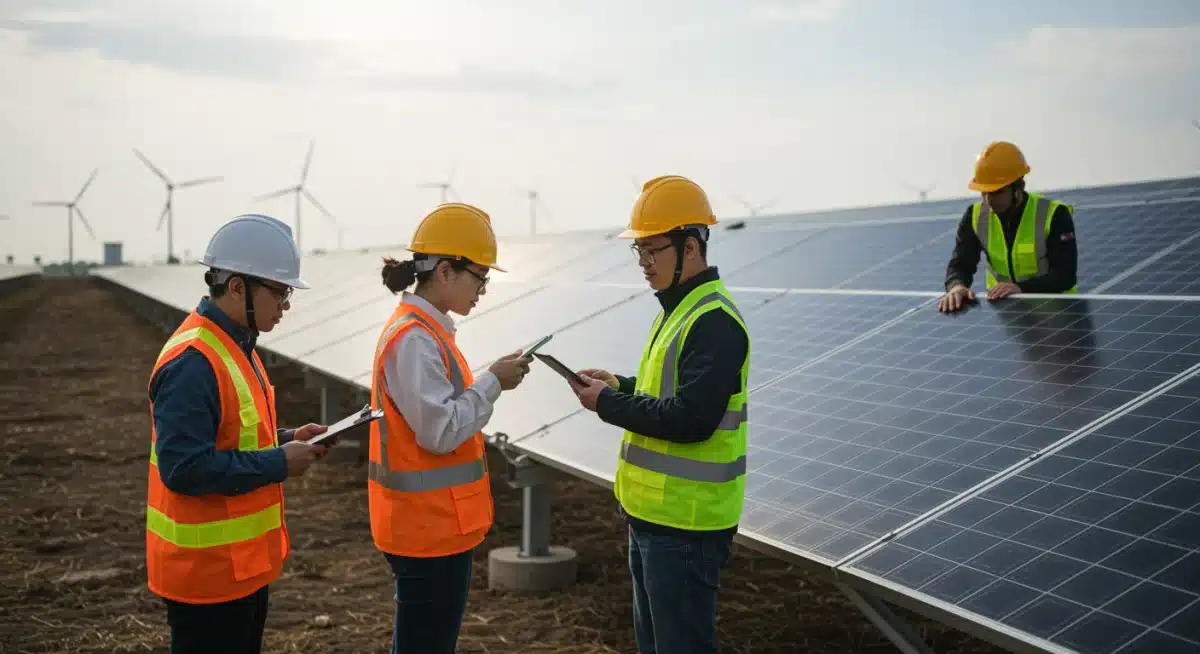
The renewable energy sector is a significant source of job creation, encompassing roles in manufacturing, project development, installation, operations, and maintenance. These jobs often offer competitive wages and require diverse skill sets.
Investment in renewable energy projects also stimulates local economies through supply chain development and increased tax revenues.
Communities hosting wind farms or solar arrays often benefit from new infrastructure and economic activity, providing a stable source of income for many years. The 2026 Energy Outlook offers a pathway to economic revitalization in various regions.
Furthermore, the shift to renewables can lead to greater energy price stability by reducing exposure to volatile fossil fuel markets. This stability benefits businesses and consumers alike, making long-term energy planning more predictable.
The economic advantages underscore the strategic importance of the 2026 Energy Outlook.
Environmental Benefits and Sustainability Goals
The environmental advantages of the trends outlined in the
Energy Outlook: Renewable Sources Expected to Power 30% of US Grid, a 5% Increase from 2025, are profound.
Increasing the share of renewable energy significantly reduces greenhouse gas emissions, directly combating climate change and improving air quality.
This transition is crucial for meeting national and international climate targets.
By displacing fossil fuel-based electricity generation, renewables help mitigate the health impacts associated with air pollution, such as respiratory illnesses.
Cleaner air leads to healthier communities and reduces healthcare costs. These benefits extend beyond just carbon emissions, encompassing a broader spectrum of environmental improvements.
The sustained growth of renewable energy contributes to a more sustainable energy system, reducing reliance on finite resources and promoting a circular economy approach.
This long-term vision for energy production is fundamental to the nation’s broader sustainability goals. The 2026 Energy Outlook is a cornerstone of this environmental commitment.
Future Projections Beyond 2026
The momentum observed in the Energy Outlook, is expected to continue well beyond 2026.
Industry experts and government agencies project even higher renewable energy penetration in the coming decades, with some forecasts suggesting over 50% by 2030 and even higher percentages by mid-century.
This sustained growth will reshape the entire energy ecosystem.
Key areas for future development include advanced energy storage technologies, offshore wind expansion, and further integration of distributed energy resources like rooftop solar and community microgrids.
These innovations will enhance grid resilience and decentralize power generation, offering greater flexibility and security. The trajectory set by the 2026 Energy Outlook is just the beginning.
Policy frameworks will likely evolve to support these deeper decarbonization efforts, potentially including carbon pricing mechanisms or more stringent emissions standards.
International collaboration and technological transfer will also play a role in accelerating the global energy transition, building on the progress highlighted in the 2026 Energy Outlook.
The future of energy is undeniably renewable.
| Key Point | Brief Description |
|---|---|
| Renewable Share | Projected to reach 30% of US grid by 2026. |
| Growth Rate | A significant 5% increase compared to 2025 figures. |
| Key Drivers | Policy incentives, technological advances, and market demand. |
| Impact | Enhanced energy independence, job creation, and environmental benefits. |
Frequently Asked Questions About the 2026 Energy Outlook
The 2026 Energy Outlook projects that renewable sources will account for 30% of the total electricity generated on the US grid. This represents a substantial 5% increase from the projected share in 2025, indicating an accelerated transition towards cleaner energy within the nation’s power sector.
The surge in renewable energy is predominantly driven by significant expansions in solar and wind power generation. These two sources benefit from continuous technological advancements, declining costs, and supportive government policies, making them increasingly competitive and scalable across various regions of the United States.
Government policies, such as federal tax credits (e.g., ITC and PTC) and state-level renewable portfolio standards, are crucial. These incentives reduce financial risks for investors and mandate a certain percentage of electricity from renewables, thereby accelerating project development and deployment to meet the 2026 Energy Outlook targets.
Potential challenges include the intermittency of renewable sources, requiring advanced energy storage solutions, and the need for significant grid modernization investments. Additionally, complex siting and permitting processes for new projects and transmission lines can cause delays, impacting the timely achievement of the 2026 Energy Outlook goals.
The increased reliance on renewable energy enhances US energy independence, reduces greenhouse gas emissions, and creates numerous jobs in the green energy sector. It also contributes to a more stable energy market and improved public health through cleaner air, aligning with long-term sustainability objectives outlined in the 2026 Energy Outlook.
Looking Ahead: The Path Beyond 2026
The 2026 Energy Outlook: Renewable Sources Expected to Power 30% of US Grid, a 5% Increase from 2025, sets a clear direction for the nation’s energy future.
This significant milestone underscores a national commitment to sustainable power and highlights the ongoing, concerted efforts to transform the energy grid.
Stakeholders should continue to monitor policy developments, technological breakthroughs, and investment trends, as these factors will dictate the pace and scale of further renewable integration.
The journey towards a fully decarbonized grid remains dynamic, with consistent, incremental progress serving as the new standard for the industry.
For a deeper analysis of these long-term trends and global energy dynamics, you can consult the Resources for the Future (RFF) Global Energy Outlook 2026.