Boost Student Engagement 15%: U.S. Educator Strategy 2026

Anúncios
Latest developments on Achieving a 15% Increase in Student Engagement: A 3-Month Strategy for U.S. Educators in 2026, with key facts, verified sources and what readers need to monitor next in Estados Unidos, presented clearly in Inglês (Estados Unidos) (en-US).
Achieving a 15% Increase in Student Engagement: A 3-Month Strategy for U.S. Educators in 2026 is shaping today’s agenda with new details released by officials and industry sources. This update prioritizes what changed, why it matters and what to watch next, in a straightforward news format.
The Imperative for Enhanced Student Engagement
The call for boosting student engagement is not new, but the urgency has intensified in recent years. Educators across the United States are grappling with evolving learning landscapes, digital distractions, and the need to prepare students for a rapidly changing world.
A significant focus is now on proactive strategies that yield measurable results within a defined timeframe. The goal of Achieving a 15% Increase in Student Engagement: A 3-Month Strategy for U.S. Educators in 2026 reflects a national commitment to revitalizing the classroom experience.
This ambitious target underscores the belief that engaged students are more likely to achieve academic success, develop critical thinking skills, and become lifelong learners. The strategy provides a clear roadmap for schools and districts.
Understanding the Current Landscape of Student Engagement
Before implementing any new strategy, it is crucial to understand the baseline of student engagement. Recent national surveys indicate varying levels of student participation, often influenced by factors such as socio-economic background, access to resources, and teaching methodologies.
Many educators report challenges in maintaining consistent student engagement, especially in larger classes or with complex subjects. This understanding forms the foundation for targeted interventions within the broader student engagement strategy.
The current landscape also highlights disparities in engagement across different demographic groups and educational settings. Addressing these disparities is a core component of the national effort to achieve a substantial increase in student engagement.
Key Factors Influencing Engagement
Several factors consistently emerge as critical influencers of student engagement. These include the relevance of curriculum, the quality of teacher-student relationships, and the opportunities for active, hands-on learning experiences.
Technology integration also plays a dual role, offering powerful tools for engagement while also presenting potential distractions. Effective strategies must navigate these complexities to truly enhance student engagement.
- Curriculum relevance and real-world connections
- Positive teacher-student and peer relationships
- Opportunities for active and experiential learning
- Effective and thoughtful technology integration
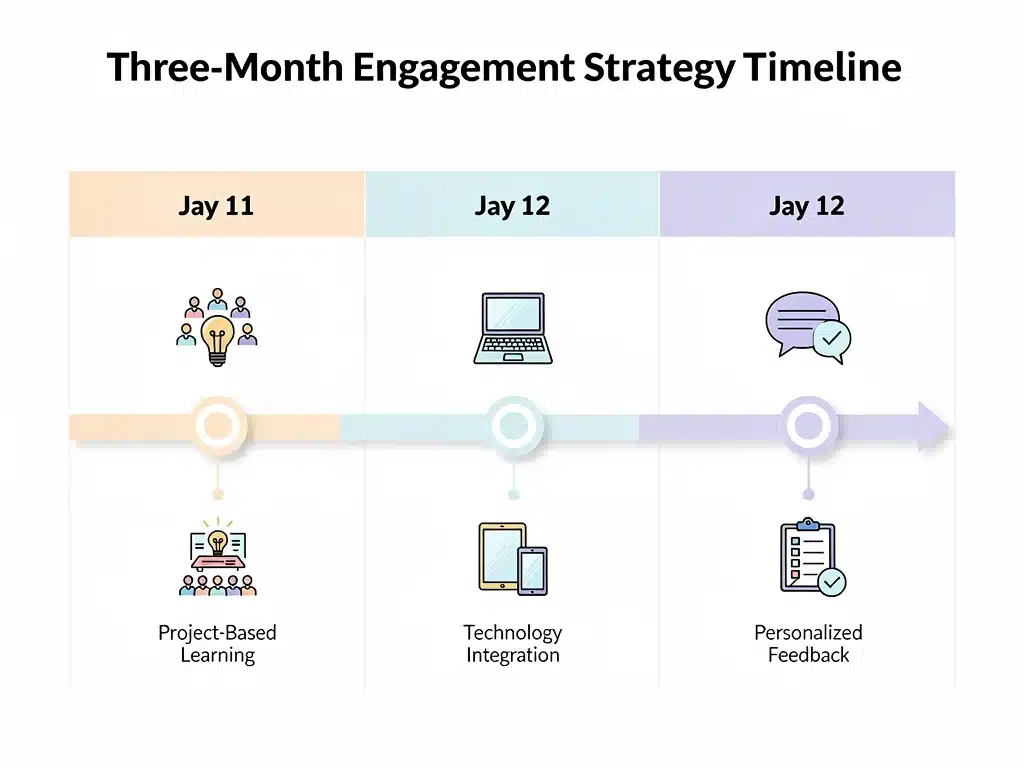
Month 1: Establishing Foundations and Personalization
The initial month of the 3-month strategy focuses on laying a strong foundation for increased student engagement. This involves a dual approach: assessing current engagement levels and introducing personalized learning elements.
Educators will utilize surveys, classroom observations, and informal feedback to gather baseline data. This data will then inform the first wave of personalized interventions designed to meet individual student needs and preferences.
Personalization is key to fostering a sense of ownership and relevance for students. By tailoring content and activities, educators can make learning more meaningful and directly address what motivates each student, improving overall student engagement.
Data-Driven Baseline Assessment
The first step involves a comprehensive assessment to establish a clear baseline. This includes quantitative data, such as attendance rates and assignment completion, alongside qualitative insights from student and teacher interviews.
Understanding where engagement is currently lacking allows for more precise targeting of resources and efforts. This data-driven approach is essential for measuring the 15% increase in student engagement effectively.
- Conducting student engagement surveys
- Analyzing attendance and participation records
- Observing classroom dynamics and student interactions
- Gathering teacher feedback on student motivation
Month 2: Innovative Pedagogies and Collaborative Learning
The second month shifts focus to implementing innovative teaching methods and fostering collaborative learning environments. This phase is designed to introduce novel approaches that actively involve students in the learning process, moving beyond traditional lecture formats.
Project-based learning, inquiry-based approaches, and problem-solving scenarios will be emphasized. These methodologies encourage critical thinking, creativity, and deeper understanding, all contributing to higher student engagement.
Collaborative learning activities, such as group projects and peer tutoring, will also be integrated to build a sense of community and shared responsibility among students. This social aspect often significantly boosts student engagement.

Implementing Project-Based Learning
Project-based learning (PBL) challenges students to work on real-world problems over an extended period. This approach inherently promotes higher levels of student engagement by making learning relevant and hands-on.
Educators will be provided with resources and training to design and facilitate effective PBL units. The emphasis is on projects that allow for student voice and choice, further enhancing their investment in the work.
The success of PBL in increasing student engagement hinges on clear project guidelines, adequate scaffolding, and opportunities for reflection and revision. These elements ensure that students are not just busy, but deeply learning.
Month 3: Technology Integration and Continuous Feedback Loops
The final month of the strategy concentrates on leveraging technology to enhance learning and establishing robust feedback mechanisms. Technology, when used thoughtfully, can transform passive learning into active exploration and creation, significantly impacting student engagement.
This involves integrating educational apps, virtual reality, and interactive platforms that cater to diverse learning styles. The goal is to make learning more dynamic and accessible, thereby sustaining the increased student engagement.
Crucially, this month also focuses on creating continuous feedback loops, allowing students to receive timely, constructive input and empowering them to take ownership of their learning journey. This iterative process is vital for maintaining and further boosting student engagement.
Strategic Use of Educational Technology
Technology is not merely a tool but a catalyst for engagement when applied strategically. Interactive whiteboards, gamified learning platforms, and virtual field trips can make abstract concepts tangible and exciting.
The focus is on technology that promotes interaction, collaboration, and personalized learning paths. This ensures that digital tools serve to deepen understanding rather than merely replacing traditional methods, leading to higher student engagement.
Training for educators on best practices for technology integration is paramount. This ensures that tools are used effectively to support pedagogical goals and maximize their potential for enhancing student engagement.
Measuring Success: Tracking the 15% Increase
A critical aspect of the 3-month strategy is the systematic measurement of progress towards the 15% increase in student engagement. This involves a multi-faceted approach to data collection and analysis, extending beyond traditional academic metrics.
Key performance indicators (KPIs) will include student participation rates in class discussions, completion rates of optional assignments, and involvement in extracurricular activities. Qualitative data from student focus groups and teacher observations will also be vital.
Regular reviews of this data will allow educators to identify successful strategies and areas needing adjustment. This continuous evaluation ensures the strategy remains agile and effective in Achieving a 15% Increase in Student Engagement: A 3-Month Strategy for U.S. Educators in 2026.
Key Performance Indicators for Engagement
Tracking specific KPIs is essential for objectively measuring the impact of the implemented strategies. These indicators provide tangible evidence of increased student engagement and guide future adjustments.
Beyond academic performance, KPIs will encompass behavioral and emotional aspects of engagement. This holistic view ensures that all facets of student participation are considered when evaluating the success of the initiative.
- Class participation frequency
- Voluntary assignment completion
- Student feedback on lesson enjoyment
- Attendance at optional learning events
- Self-reported motivation and interest
Overcoming Challenges and Ensuring Sustainability
Implementing a comprehensive strategy like Achieving a 15% Increase in Student Engagement: A 3-Month Strategy for U.S. Educators in 2026 will inevitably encounter challenges. These can range from resource limitations to resistance to change from both students and educators.
Proactive planning includes anticipating these obstacles and developing mitigation strategies. Continuous professional development for educators, along with clear communication channels, will be crucial for addressing concerns and fostering buy-in.
Ensuring the sustainability of the increased student engagement beyond the three-month period requires embedding these new practices into the school culture. This means ongoing support, resource allocation, and a commitment to continuous improvement.
Addressing Educator Training Needs
Effective implementation of innovative pedagogies and technology requires well-trained educators. Comprehensive professional development programs are essential to equip teachers with the skills and confidence needed to drive student engagement.
Training should not be a one-time event but an ongoing process, offering opportunities for collaboration and peer learning. This continuous support helps educators adapt to new tools and methods, ensuring sustained student engagement.
Investing in educator development is an investment in the future of student engagement. Empowered teachers are more likely to create dynamic and inspiring learning environments that captivate students.
The Long-Term Impact on U.S. Education
The success of Achieving a 15% Increase in Student Engagement: A 3-Month Strategy for U.S. Educators in 2026 has profound implications for the future of education. A sustained increase in student engagement can lead to improved academic outcomes, reduced dropout rates, and a more positive school climate.
Engaged students are better equipped to navigate complex challenges, think critically, and contribute meaningfully to society. This strategy is not just about numbers; it’s about fostering a generation of curious, motivated, and capable learners.
The lessons learned from this initiative will inform future educational policies and practices, potentially setting a new standard for how student engagement is approached nationwide. It represents a significant step towards a more effective and equitable education system.
| Key Point | Brief Description |
|---|---|
| Strategy Goal | Achieve a 15% increase in student engagement by 2026. |
| Three-Month Focus | Foundations, innovative pedagogies, technology integration. |
| Measurement | Data-driven KPIs, surveys, and qualitative feedback. |
| Sustainability | Ongoing professional development and cultural embedding. |
Frequently Asked Questions About Student Engagement
The main objective is to achieve a 15% increase in student engagement among U.S. educators by 2026. This target is designed to foster more dynamic learning environments and improve overall educational outcomes nationwide, focusing on active participation.
Measurement will involve a combination of quantitative and qualitative methods. This includes tracking participation rates, assignment completion, attendance, and student feedback through surveys and observations to gauge the increase in student engagement effectively.
Technology is a key component, integrated strategically to enhance interactive and personalized learning experiences. Educational apps, virtual reality, and collaborative platforms will be utilized to make learning more engaging and accessible, boosting student engagement.
Anticipated challenges include resource limitations, potential resistance to new methodologies, and the need for continuous educator training. Proactive planning and robust professional development are crucial for overcoming these obstacles and ensuring the success of the student engagement strategy.
Sustainability will be ensured through ongoing professional development for educators, embedding new practices into school culture, and continuous evaluation and adjustment of strategies. The goal is to make these engagement-boosting methods standard practice, maintaining high student engagement.
Looking Ahead: The Future of Engaged Learning
The initiative to achieve a 15% increase in student engagement is more than a short-term project; it’s a blueprint for the future of U.S. education. The insights gained will drive policy and pedagogical shifts, fostering environments where students are not just present, but deeply invested in their learning. This effort underscores a national commitment to cultivating lifelong learners and critical thinkers, preparing them for an evolving world.