Top 7 Emerging Education Technologies Transforming U.S. Classrooms by 2027
Anúncios
Latest developments on The Top 7 Emerging Education Technologies Poised to Transform U.S. Classrooms by 2027, with key facts, verified sources and what readers need to monitor next in Estados Unidos, presented clearly in Inglês (Estados Unidos) (en-US).
The Top 7 Emerging Education Technologies Poised to Transform U.S. Classrooms by 2027 is shaping today’s agenda with new details released by officials and industry sources. This update prioritizes what changed, why it matters and what to watch next, in a straightforward news format.
The Dawn of a New Educational Era in the U.S.
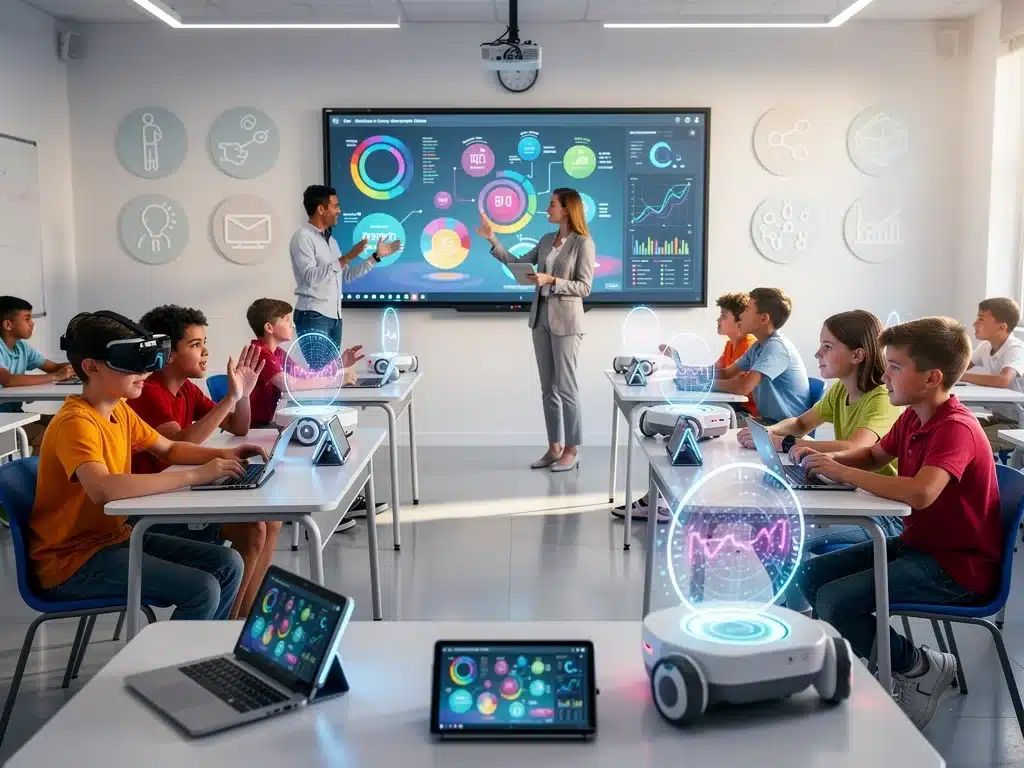
The United States education system stands at the precipice of a monumental transformation, driven by an accelerating pace of technological innovation. Educators, administrators, and policymakers are increasingly looking towards sophisticated tools to enhance learning outcomes and address the diverse needs of students.
This shift is not merely about integrating gadgets but about fundamentally rethinking pedagogical approaches and fostering an environment where technology empowers both teaching and learning. The focus is on creating more engaging, personalized, and effective educational experiences across all levels.
As we approach 2027, the impact of these emerging education technologies will become more pronounced, reshaping curricula, classroom dynamics, and the very definition of academic success. Understanding these developments is critical for navigating the future of American education.
Artificial Intelligence and Machine Learning: Personalized Learning Pathways
Artificial Intelligence (AI) and Machine Learning (ML) are rapidly becoming cornerstone technologies in education, promising to revolutionize how students learn and teachers instruct. These technologies enable highly personalized learning experiences, adapting content and pace to individual student needs and learning styles.
AI-powered platforms can identify learning gaps, recommend tailored resources, and even provide real-time feedback, fostering a more effective and engaging educational journey. This level of customization was previously unimaginable in traditional classroom settings, marking a significant leap forward.
By automating routine tasks, AI also frees up educators to focus more on critical thinking, creative problem-solving, and one-on-one mentorship, thereby enhancing the human element of teaching rather than replacing it. The integration of these tools is a key component of the emerging education technologies landscape.
Adaptive Learning Systems
Adaptive learning systems leverage AI to continuously assess student comprehension and adjust the curriculum accordingly. This ensures that each student receives instruction that is neither too challenging nor too simplistic, optimizing their learning trajectory.
These systems can provide instant insights into student progress, allowing teachers to intervene effectively and offer targeted support. The data collected also helps refine teaching strategies at a broader level, benefiting entire cohorts of students.
Intelligent Tutoring Systems
Intelligent tutoring systems offer personalized, on-demand assistance, acting as virtual mentors for students. These systems can answer questions, explain complex concepts, and guide students through problem-solving steps, mimicking the support of a human tutor.
They are particularly valuable for subjects requiring extensive practice and immediate feedback, such as mathematics and science. These systems represent a significant advancement in making high-quality, individualized instruction accessible to a wider student population.
Virtual and Augmented Reality: Immersive Learning Environments
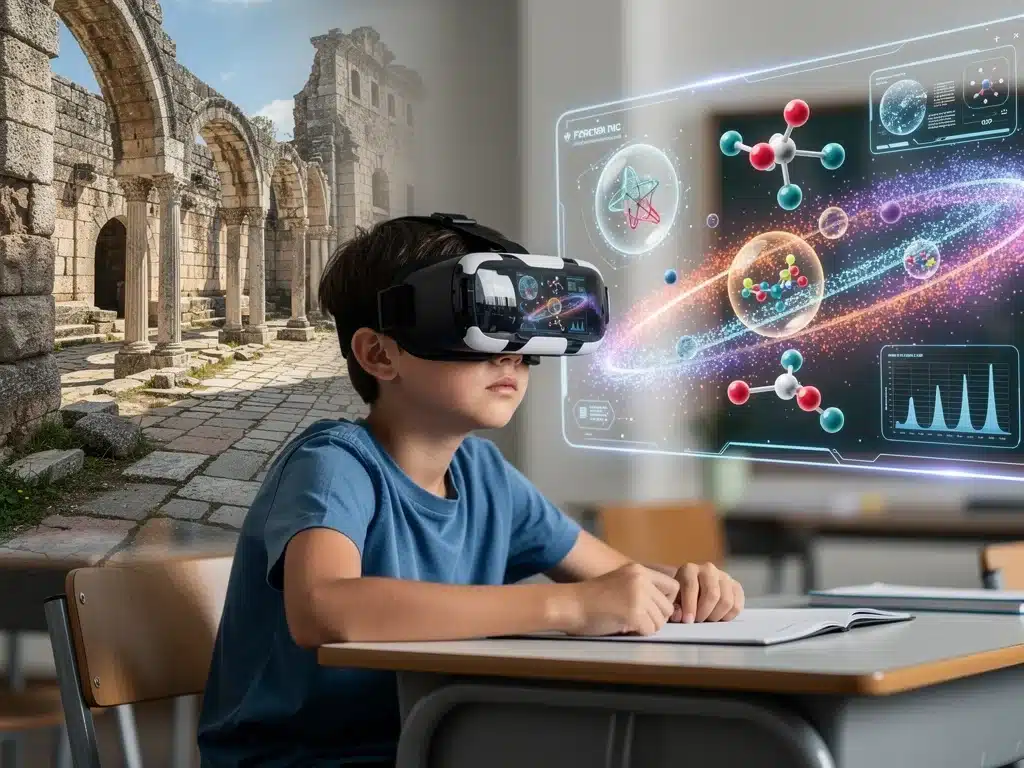
Virtual Reality (VR) and Augmented Reality (AR) are transforming passive learning into immersive, experiential adventures. These technologies allow students to explore historical sites, conduct virtual science experiments, or even dissect virtual organs, all from within the classroom.
Such immersive experiences deepen understanding and retention by making abstract concepts tangible and engaging. The ability to interact with digital content in a three-dimensional space opens up unprecedented possibilities for active learning and exploration.
From virtual field trips to interactive simulations, VR and AR are poised to make learning more exciting and memorable, breaking down geographical and logistical barriers to educational content. These are truly transformative emerging education technologies.
VR for Experiential Education
VR platforms transport students to places and times otherwise inaccessible, offering unparalleled experiential learning. Imagine exploring ancient Rome or walking on the moon, all within the confines of the classroom.
This direct engagement with content helps foster a deeper understanding and appreciation for subjects that might otherwise seem distant or abstract. The emotional connection forged through these experiences significantly aids memory and comprehension.
AR for Enhanced Classroom Interaction
AR overlays digital information onto the real world, enhancing existing learning materials with interactive elements. Students can use tablets to view 3D models of organs on a textbook page or see historical figures come to life in their classroom.
This technology makes learning more interactive and dynamic, allowing students to manipulate virtual objects and gain new perspectives on physical surroundings. AR bridges the gap between the digital and physical, making learning more contextual and engaging.
Gamification and Game-Based Learning: Engaging the Digital Generation
Gamification, the application of game-design elements and game principles in non-game contexts, and game-based learning, the integration of educational content into actual games, are proving highly effective in boosting student engagement and motivation. These approaches leverage the inherent appeal of games to make learning more enjoyable and interactive.
By incorporating elements like points, badges, leaderboards, and narrative challenges, educators can transform mundane tasks into exciting quests, encouraging persistence and active participation. This taps into students’ natural competitive and collaborative instincts.
Game-based learning, in particular, allows for complex concepts to be presented in an accessible and entertaining format, often fostering problem-solving skills and critical thinking in a low-stakes environment. These methods are vital emerging education technologies for the modern student.
Motivational Impact of Gamification
Gamification leverages psychological principles to increase student motivation and sustained effort. The immediate feedback and sense of achievement provided by game elements can significantly improve students’ willingness to engage with challenging material.
It also fosters a growth mindset by reframing mistakes as opportunities for learning and improvement, rather than failures. This positive reinforcement loop is crucial for building resilience and self-efficacy in learners.
Robotics and Coding Education: Preparing for the Future Workforce
Introducing robotics and coding education into U.S. classrooms is no longer a luxury but a necessity for preparing students for the demands of the 21st-century workforce. These fields develop critical thinking, problem-solving, and computational skills that are essential in an increasingly technology-driven world.
Students learn to design, build, and program robots, gaining hands-on experience with engineering principles and logical sequencing. This practical application of knowledge makes abstract concepts more concrete and understandable.
Early exposure to coding empowers students with the language of technology, enabling them to become creators rather than just consumers of digital tools. This foundational understanding is a core aspect of future-oriented emerging education technologies.
Developing Computational Thinking
Coding and robotics inherently teach computational thinking, a problem-solving process that involves breaking down complex problems into smaller, manageable parts. This skill is transferable across disciplines and crucial for navigating a complex world.
Students learn to think algorithmically, identify patterns, and design solutions, fostering a systematic approach to challenges. These cognitive benefits extend far beyond the realm of computer science, impacting overall academic performance.
Blockchain Technology: Secure Credentials and Transparent Learning Records
While often associated with cryptocurrencies, blockchain technology has significant potential to enhance security and transparency in education. Specifically, it can revolutionize the way academic credentials, records, and intellectual property are managed and verified.
By creating immutable and decentralized ledgers, blockchain can ensure the authenticity of diplomas, transcripts, and certifications, making them tamper-proof and easily verifiable. This reduces fraud and streamlines the credentialing process for students and institutions.
Beyond credentials, blockchain could also facilitate transparent tracking of learning achievements and skill development, offering a comprehensive and verifiable record of a student’s educational journey. This application of blockchain is a cutting-edge example of emerging education technologies.
Verifiable Digital Credentials
Blockchain-based digital credentials offer a secure and efficient way to issue and verify academic achievements. Students can own their verifiable records, sharing them securely with prospective employers or other educational institutions.
This eliminates the need for intermediaries and reduces the time and cost associated with traditional verification processes. The integrity of these digital certificates is maintained through cryptographic security, ensuring their authenticity.
Data Analytics and Learning Analytics: Informing Instructional Decisions
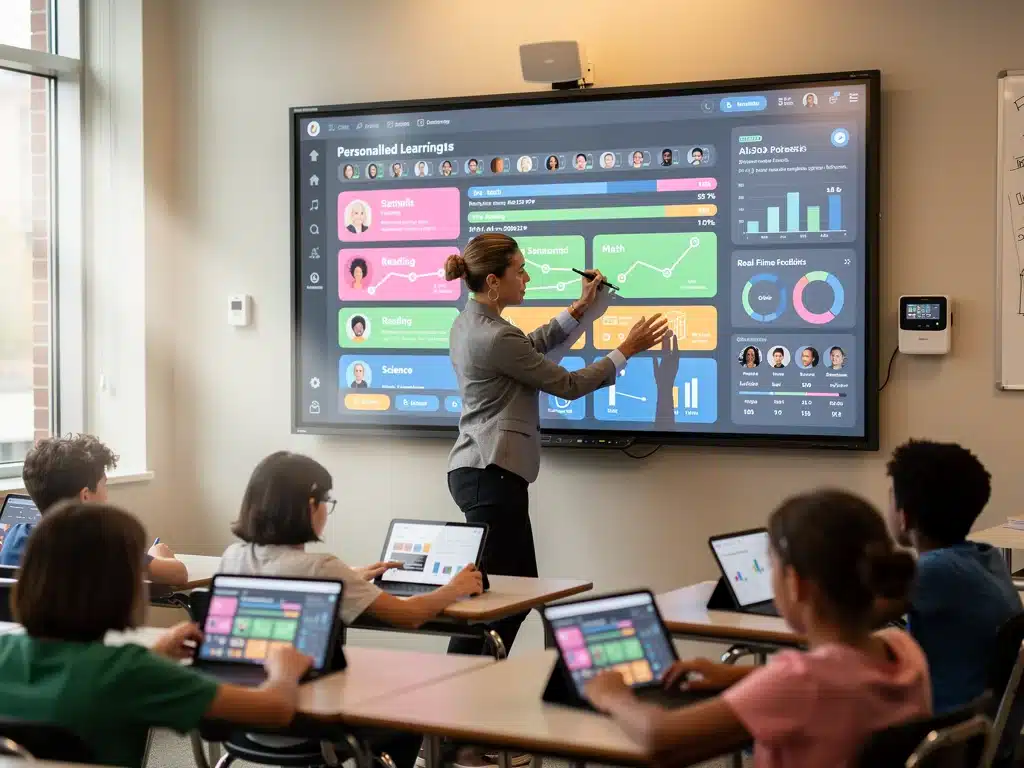
The vast amounts of data generated within educational platforms hold immense potential for improving teaching and learning. Data analytics and learning analytics provide educators with actionable insights into student performance, engagement patterns, and the effectiveness of instructional strategies.
By analyzing this data, teachers can identify students who are struggling, pinpoint areas where the curriculum might need adjustment, and tailor interventions more effectively. This data-driven approach moves beyond intuition to evidence-based decision-making.
Learning analytics tools can predict potential academic risks, allowing for proactive support and personalized guidance, ultimately leading to better student outcomes. These analytical tools are indispensable emerging education technologies for modern pedagogy.
Predictive Analytics in Education
Predictive analytics uses historical and real-time data to forecast student performance and identify those at risk of falling behind. This allows educators to intervene early, providing targeted support before problems escalate.
Such insights can also inform curriculum development and resource allocation, ensuring that educational interventions are both timely and effective. The ability to anticipate challenges is a powerful asset in fostering student success.
Collaborative Platforms and Hybrid Learning Models: Flexible and Inclusive Education
The rise of sophisticated collaborative platforms and the widespread adoption of hybrid learning models are reshaping the structure of U.S. classrooms. These technologies facilitate seamless interaction, resource sharing, and flexible learning pathways, catering to a diverse student population.
Collaborative tools enable students to work together on projects regardless of their physical location, fostering teamwork and communication skills essential for the modern world. Hybrid models blend in-person and online instruction, offering flexibility and accessibility.
This approach ensures continuity of education, particularly during unforeseen disruptions, and allows for personalized learning schedules that accommodate individual student needs. These platforms are crucial emerging education technologies for a resilient and inclusive educational system.
Enhancing Remote Collaboration
Modern collaborative platforms offer a suite of tools for real-time document editing, video conferencing, and project management. These features enable students and teachers to connect and work together effectively, even when physically separated.
Such tools are vital for fostering a sense of community and shared purpose in remote or hybrid learning environments. They ensure that collaborative learning remains a cornerstone of education, regardless of modality.
| Technology | Primary Impact |
|---|---|
| AI & Machine Learning | Personalized learning, adaptive content |
| VR & AR | Immersive, experiential learning environments |
| Gamification | Increased student engagement and motivation |
| Robotics & Coding | Future workforce skills, computational thinking |
Frequently Asked Questions About Education Technology
AI will automate grading of routine assignments, provide instant feedback to students, and personalize learning paths, freeing teachers to focus on complex instruction and individual student needs. It will also help identify struggling students earlier for targeted interventions, making classrooms more efficient and effective.
Key challenges include ensuring equitable access across all socio-economic backgrounds, providing adequate teacher training, integrating new systems with existing infrastructure, and addressing data privacy and security concerns. Funding for these significant upgrades also remains a considerable hurdle for many districts.
VR and AR can offer K-12 students immersive experiences like virtual field trips to historical sites or scientific labs, making abstract concepts tangible. They can also enhance engagement through interactive simulations, fostering deeper understanding and improving retention by making learning more exciting and memorable.
No, these technologies are designed to augment and support teachers, not replace them. They automate repetitive tasks and provide data-driven insights, allowing educators to focus more on critical thinking, emotional intelligence, and personalized mentorship. The human element of teaching remains irreplaceable for fostering holistic student development.
Data analytics helps educators understand student performance, identify learning patterns, and predict academic risks. This enables timely, targeted interventions and personalized support. It also informs curriculum development and instructional strategies, leading to more evidence-based decision-making and ultimately better student outcomes across the board.
Looking Ahead: The Evolving Landscape of Education
The integration of the identified emerging education technologies represents more than just an upgrade of tools; it signifies a paradigm shift in how education is conceived and delivered. These innovations are not merely trends but foundational changes that will define educational excellence in the coming years.
As these technologies mature and become more accessible, their collective impact will lead to more equitable, engaging, and effective learning environments for all students across the U.S. Policymakers and educators must continue to collaborate to harness their full potential.
The journey towards 2027 will be marked by continuous adaptation and innovation, ensuring that American classrooms remain at the forefront of global educational advancements. The focus will remain on fostering critical skills and preparing students for an ever-changing future.