Future of Vocational Training in U.S.: 3 Key Trends for 2026
Anúncios
The latest developments concerning The Future of Vocational Training in the U.S.: 3 Key Trends for 2026 and Beyond are now emerging, highlighting crucial shifts in workforce preparation. This report provides a factual overview of what is changing, why these trends matter, and what stakeholders should anticipate moving forward. It offers a direct and verified analysis for readers.
The Future of Vocational Training in the U.S.: 3 Key Trends for 2026 and Beyond is rapidly taking shape, driven by technological advancements, evolving economic demands, and a renewed focus on skill development. Understanding these pivotal trends is essential for policymakers, educators, students, and employers to navigate the changing landscape effectively. The shifts promise to redefine how America prepares its workforce for the challenges and opportunities of tomorrow.
This article delves into the core transformations occurring within vocational education, providing context and verified analysis. We will explore how these trends are not just theoretical but are actively being implemented across various sectors, influencing curriculum design and instructional methodologies. The aim is to offer a clear, objective perspective on what lies ahead.
The insights presented here are drawn from industry reports, educational reforms, and expert projections, ensuring a comprehensive and trustworthy understanding of the subject. By focusing on the practical implications of these trends, we aim to equip readers with the knowledge needed to make informed decisions regarding their educational and career pathways. The conversation around The Future of Vocational Training in the U.S.: 3 Key Trends for 2026 and Beyond demands careful attention.
The Rise of Technology Integration in Vocational Education
Technology is no longer just a tool but an integral component of modern vocational training, fundamentally reshaping how skills are taught and acquired. From virtual reality simulations to artificial intelligence-driven personalized learning platforms, digital tools are enhancing engagement and effectiveness. This integration addresses the need for a workforce proficient in advanced digital competencies.
The ongoing digital transformation across industries necessitates that vocational programs mirror these changes, preparing students for jobs that increasingly demand technological literacy. This trend ensures graduates are not only skilled in traditional trades but are also adept at utilizing the latest digital innovations. The emphasis is on practical application within a tech-rich environment.
Institutions are investing heavily in state-of-the-art equipment and software, creating immersive learning experiences that simulate real-world work environments. This proactive approach ensures that students are job-ready upon graduation, possessing the cutting-edge skills required by employers. It is a critical aspect of The Future of Vocational Training in the U.S.: 3 Key Trends for 2026 and Beyond.
Virtual and Augmented Reality for Immersive Learning
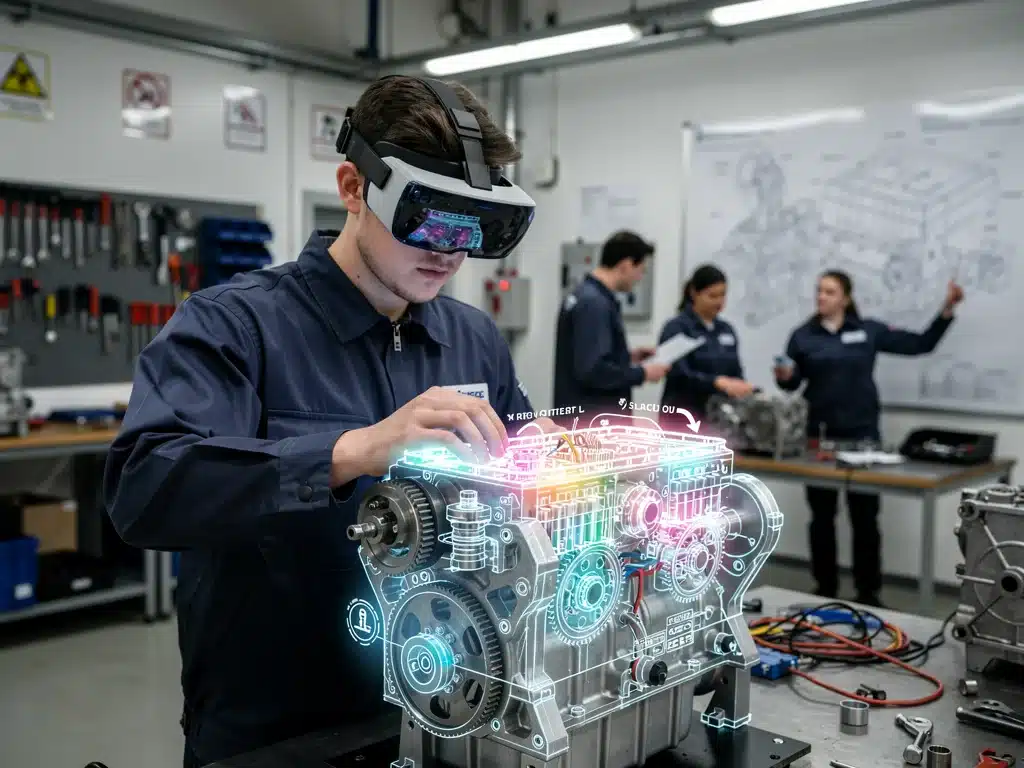
Virtual Reality (VR) and Augmented Reality (AR) are revolutionizing vocational training by offering realistic, risk-free environments for skill development. Students can practice complex procedures, operate heavy machinery, or perform intricate repairs without the need for expensive physical equipment or the danger of real-world mistakes. This technology accelerates learning curves and builds confidence.
According to recent reports, industries such as healthcare, manufacturing, and construction are rapidly adopting VR/AR for training, proving its efficacy in skill transfer. Vocational schools are following suit, integrating these immersive tools to provide unparalleled hands-on experience. This approach is particularly valuable for fields requiring precision and critical decision-making.
- Reduced training costs by minimizing material waste and equipment wear.
- Enhanced safety by allowing practice in hazardous environments without actual risk.
- Improved retention rates through engaging and interactive learning experiences.
- Access to rare or expensive equipment through digital simulations.
AI and Data Analytics in Curriculum Design
Artificial Intelligence (AI) and data analytics are increasingly being leveraged to personalize learning paths and optimize curriculum content in vocational programs. AI algorithms can identify individual student strengths and weaknesses, tailoring educational materials to meet specific needs and learning styles. This ensures more efficient and effective skill acquisition.
Data analytics provides insights into industry demands, allowing educators to adapt curricula to match current and future workforce needs precisely. By analyzing job market trends and employer feedback, institutions can ensure their programs remain relevant and produce highly employable graduates. This proactive adjustment is vital for maintaining program quality.
Strengthening Industry-Education Partnerships
Robust partnerships between vocational training institutions and industry leaders are becoming indispensable for bridging the skills gap and ensuring program relevance. These collaborations provide students with real-world exposure, internships, and direct pathways to employment. They also ensure that curriculum development is directly informed by industry needs.
Such partnerships often involve co-designing curricula, offering apprenticeships, and providing access to cutting-edge industry equipment. This symbiotic relationship benefits both sides: businesses gain access to a pipeline of skilled workers, while students receive training that is directly applicable and valued in the job market. This is a cornerstone of The Future of Vocational Training in the U.S.: 3 Key Trends for 2026 and Beyond.
The shift towards stronger industry ties reflects a recognition that vocational education cannot operate in isolation from the economic realities it serves. Active engagement with employers ensures that training programs evolve dynamically, responding to technological advancements and market shifts. This collaborative model is fostering a more agile and responsive educational ecosystem.
Apprenticeships and Work-Based Learning Expansion
The expansion of apprenticeships and other work-based learning models is a critical component of strengthening industry-education ties. These programs offer students the unique opportunity to learn on the job, earning wages while acquiring valuable skills under the guidance of experienced professionals. This practical experience is often more impactful than traditional classroom learning alone.
Federal and state initiatives are increasingly supporting the growth of apprenticeships, recognizing their effectiveness in addressing workforce shortages and fostering economic growth. Companies are also finding these programs to be a cost-effective way to train and retain skilled employees. The benefits extend to both trainees and employers, creating a win-win scenario.
- Direct application of classroom knowledge in a professional setting.
- Mentorship from industry experts, providing invaluable guidance.
- Earn while you learn, reducing financial burden on students.
- High employment rates upon completion, with clear career progression paths.
Curriculum Co-Development with Employers
Collaborating with employers to co-develop curriculum ensures that vocational programs are precisely aligned with current industry standards and future demands. This direct input from businesses helps identify essential skills, tools, and technologies that graduates must master to succeed in their chosen fields. It eliminates the disconnect often found in traditional academic settings.
This approach often involves industry professionals serving on advisory boards, providing guest lectures, and even teaching specialized modules. Their real-world expertise enriches the educational experience, making it more relevant and practical for students. The result is a highly responsive curriculum that adapts quickly to market changes, a key aspect of The Future of Vocational Training in the U.S.: 3 Key Trends for 2026 and Beyond.

Personalized Learning Pathways and Micro-Credentials
The demand for flexible, personalized learning experiences is transforming vocational training, moving away from one-size-fits-all models. Students increasingly seek customized pathways that align with their individual career goals, prior learning, and preferred pace. This trend is facilitated by modular learning and the rise of micro-credentials.
Personalized learning acknowledges that learners come with diverse backgrounds and aspirations, requiring educational approaches that can adapt. This customization not only improves student satisfaction but also enhances the efficiency of skill acquisition, allowing individuals to focus on areas most relevant to their professional development. It is central to The Future of Vocational Training in the U.S.: 3 Key Trends for 2026 and Beyond.
The advent of micro-credentials and stackable certifications provides a flexible framework for acquiring targeted skills, offering a more agile response to rapidly changing job market requirements. This empowers individuals to continuously upskill and reskill throughout their careers, maintaining their competitiveness in a dynamic economy. The focus is on measurable, outcome-based learning.
Modular Learning and Stackable Credentials
Modular learning breaks down complex vocational programs into smaller, manageable units, each culminating in a specific skill or competency. These modules can then be stacked together to form larger qualifications, providing students with flexibility and incremental recognition for their achievements. This approach makes education more accessible and adaptable.
Stackable credentials, including badges, certificates, and micro-degrees, allow individuals to acquire skills as needed, rather than committing to lengthy traditional degree programs. This is particularly appealing for adult learners or those already in the workforce seeking to specialize or reskill quickly. It represents a significant shift in educational delivery, shaping The Future of Vocational Training in the U.S.: 3 Key Trends for 2026 and Beyond.
- Increased flexibility for learners to choose relevant modules.
- Faster entry into the workforce with targeted, recognized skills.
- Opportunities for continuous professional development and upskilling.
- Clear pathways for career progression paths.
Lifelong Learning and Upskilling Initiatives
The concept of lifelong learning is gaining paramount importance in vocational training, driven by the rapid pace of technological change and evolving job requirements. Upskilling and reskilling initiatives are becoming crucial for individuals to remain employable and for businesses to maintain a competitive edge. Vocational institutions are adapting to support this continuous learning model.
Many programs are now designed with a focus on continuous professional development, offering short courses, workshops, and online resources for ongoing skill enhancement. This ensures that the workforce can adapt to new technologies and industry practices throughout their careers. The emphasis is on proactive learning to meet future demands, which is vital for The Future of Vocational Training in the U.S.: 3 Key Trends for 2026 and Beyond.
Addressing the Skills Gap with Targeted Programs
The persistent skills gap in critical sectors of the U.S. economy remains a significant challenge, driving the need for highly targeted vocational training programs. These programs are specifically designed to meet the immediate and projected demands of industries facing shortages, such as advanced manufacturing, cybersecurity, and healthcare. The focus is on precision in skill development.
By closely collaborating with employers and utilizing labor market data, vocational institutions can identify specific skill deficits and create curricula that directly address them. This proactive and responsive approach ensures that graduates possess the exact competencies required by the workforce, reducing unemployment and boosting economic productivity. It is a fundamental element of The Future of Vocational Training in the U.S.: 3 Key Trends for 2026 and Beyond.
These targeted initiatives often involve accelerated learning models and specialized certifications, allowing individuals to quickly acquire in-demand skills and enter the workforce. The effectiveness of such programs relies heavily on their ability to adapt swiftly to changing industry needs, ensuring that training remains relevant and impactful. This strategic alignment is key to future success.
Focus on Emerging Technologies and Green Jobs
Vocational training is increasingly focusing on preparing the workforce for emerging technologies and the growing sector of green jobs. This includes training in areas like renewable energy installation, electric vehicle maintenance, sustainable construction, and advanced automation. These fields represent significant growth opportunities and critical areas for national development.
Institutions are developing specialized programs to equip students with the skills needed for these new roles, from solar panel technicians to wind turbine specialists and smart grid operators. This forward-looking approach ensures that the U.S. workforce is prepared for the jobs of the future, supporting both economic growth and environmental sustainability. This is a critical direction for The Future of Vocational Training in the U.S.: 3 Key Trends for 2026 and Beyond.
- Training for renewable energy installation and maintenance.
- Development of skills for electric vehicle repair and manufacturing.
- Programs in sustainable construction and energy efficiency.
- Education in advanced robotics and automation for manufacturing.
Accessibility and Equity in Vocational Training
Ensuring equitable access to high-quality vocational training is paramount for fostering an inclusive workforce and promoting social mobility. Initiatives are focusing on reducing barriers to entry, providing financial aid, and offering flexible learning options for diverse populations. The goal is to make vocational education accessible to all who can benefit from it.
This includes addressing challenges faced by underserved communities, individuals with disabilities, and those seeking to transition careers later in life. By implementing support services, outreach programs, and adaptable learning formats, institutions are working to create a more inclusive educational environment. Equity is a core principle guiding The Future of Vocational Training in the U.S.: 3 Key Trends for 2026 and Beyond.
Efforts are also underway to make vocational training more affordable and convenient, leveraging online platforms and community-based programs. This broadens participation and ensures that a wider segment of the population can acquire valuable skills, contributing to a more robust and diverse national workforce. The focus is on removing obstacles to educational attainment.
Online and Hybrid Learning Models
The adoption of online and hybrid learning models has significantly enhanced the accessibility of vocational training, particularly for individuals with work or family commitments. These flexible formats allow students to balance their education with other responsibilities, making skill development more attainable. The pandemic accelerated the acceptance and refinement of these models.
Hybrid programs, combining online instruction with hands-on practical sessions, offer the best of both worlds, providing theoretical knowledge remotely and essential practical experience in person. This flexibility is crucial for reaching a broader demographic and ensuring continuous learning opportunities. It’s a key factor in shaping The Future of Vocational Training in the U.S.: 3 Key Trends for 2026 and Beyond.
Support for Underrepresented Groups
Targeted support programs for underrepresented groups are vital for achieving equity in vocational training. These initiatives aim to provide additional resources, mentorship, and financial assistance to women, minorities, veterans, and individuals from low-income backgrounds. The objective is to dismantle systemic barriers and create pathways to high-demand careers.
By actively recruiting and supporting these populations, vocational institutions can help diversify the workforce and address labor shortages in critical sectors. These efforts contribute to a more equitable society and strengthen the overall economic fabric of the nation. Promoting inclusivity is a central theme in discussions about The Future of Vocational Training in the U.S.: 3 Key Trends for 2026 and Beyond.
Redefining Career Pathways and Public Perception
A significant aspect of the future of vocational training involves redefining career pathways and improving public perception of skilled trades. Historically, vocational education has sometimes been viewed as a secondary option to four-year degrees, but this perspective is rapidly changing. There’s a growing recognition of the high earning potential and career stability offered by skilled professions.
Efforts are being made to highlight the innovative, high-tech nature of modern vocational careers, showcasing opportunities in fields like robotics, renewable energy, and advanced manufacturing. This re-branding aims to attract a new generation of students who are seeking practical, well-paying jobs without accumulating significant student debt. It’s crucial for the long-term viability of The Future of Vocational Training in the U.S.: 3 Key Trends for 2026 and Beyond.
By emphasizing the direct link between vocational training and successful, fulfilling careers, educators and industry leaders are working to elevate the status of skilled trades. This shift in perception is essential for attracting talent and ensuring a robust pipeline of skilled workers for the nation’s economy. The narrative is moving towards celebrating hands-on expertise.
Promoting Vocational Training in K-12 Education
Integrating vocational training concepts and career exploration earlier in K-12 education is a crucial step in reshaping public perception and guiding students toward skilled trades. By introducing hands-on learning and career pathways at a younger age, schools can spark interest and provide a clearer understanding of vocational opportunities. This early exposure helps demystify skilled careers.
Many states are implementing career and technical education (CTE) programs in high schools, offering students a head start on vocational skills and certifications. This early engagement allows students to explore various trades, make informed decisions about their post-secondary education, and potentially enter the workforce sooner. It’s a proactive measure for The Future of Vocational Training in the U.S.: 3 Key Trends for 2026 and Beyond.
- Early exposure to diverse career options.
- Development of practical skills from a young age.
- Reduced academic pressure for students not inclined towards traditional college paths.
- Clearer career roadmaps for students entering vocational programs.
Government Policies and Funding Initiatives
Government policies and strategic funding initiatives play a pivotal role in shaping The Future of Vocational Training in the U.S.: 3 Key Trends for 2026 and Beyond. Federal and state governments are increasingly recognizing the economic imperative of a skilled workforce and are investing in programs that support vocational education. This financial backing is critical for infrastructure, curriculum development, and student aid.
Legislation aimed at strengthening vocational training, such as the Perkins Act, continues to provide funding for career and technical education programs across the country. These policies often encourage partnerships between educational institutions and industries, ensuring that public investment yields directly applicable workforce skills. The regulatory environment is adapting to support these evolutions.
Beyond direct funding, government policies also influence accreditation standards, program quality, and the integration of new technologies into vocational curricula. This comprehensive support system is essential for scaling up effective training models and ensuring that the U.S. remains competitive in a global economy. The commitment to vocational training is growing.
Federal and State Investment in CTE Programs
Federal and state governments are increasing their investment in Career and Technical Education (CTE) programs, recognizing their vital role in economic development and workforce readiness. This funding supports a wide range of initiatives, from updating equipment in training facilities to developing new curricula that address emerging industry needs. The financial commitment reflects a strategic priority.
These investments are often channeled through grants and competitive funding opportunities, encouraging innovation and collaboration among vocational schools, community colleges, and employers. The goal is to build a robust ecosystem that can quickly respond to labor market demands and provide high-quality training to diverse student populations. This is integral to The Future of Vocational Training in the U.S.: 3 Key Trends for 2026 and Beyond.
The Role of Community Colleges in Workforce Development
Community colleges are uniquely positioned at the forefront of vocational training and workforce development in the U.S., serving as agile and responsive hubs for skill acquisition. Their local focus allows them to quickly adapt programs to meet regional industry needs, making them indispensable partners for businesses seeking skilled talent. They are often the first point of contact for individuals seeking career-oriented education.
These institutions offer a wide array of vocational programs, from short-term certifications to associate degrees, covering diverse fields such as healthcare, IT, manufacturing, and skilled trades. Their affordability and accessibility make them a critical pathway for many students, including adult learners and those from underserved communities. Community colleges are central to The Future of Vocational Training in the U.S.: 3 Key Trends for 2026 and Beyond.
Community colleges often forge strong partnerships with local employers, creating direct pipelines for employment and ensuring that their graduates are job-ready. They also play a crucial role in providing foundational skills and bridging educational gaps, making them a cornerstone of the national strategy for workforce development. Their flexibility and responsiveness are key assets.
Adapting to Local Industry Needs
A core strength of community colleges is their ability to rapidly adapt their vocational programs to meet the specific needs of local industries. This responsiveness is achieved through continuous engagement with regional businesses, advisory boards, and economic development agencies. They ensure that their curriculum remains current and directly addresses local skill shortages.
This localized approach allows community colleges to become vital economic engines for their communities, providing highly specialized training that directly supports local employment and business growth. Their capacity to pivot quickly in response to industry shifts is a significant advantage in the evolving landscape of The Future of Vocational Training in the U.S.: 3 Key Trends for 2026 and Beyond.
| Key Trend | Brief Description |
|---|---|
| Technology Integration | VR/AR, AI, and data analytics enhancing training efficacy. |
| Industry Partnerships | Apprenticeships and co-developed curricula bridging skill gaps. |
| Personalized Learning | Modular learning, micro-credentials, and lifelong upskilling. |
| Equity & Access | Online models & support for underrepresented groups. |
Frequently Asked Questions About Vocational Training
Technology is revolutionizing vocational training through VR/AR simulations, AI-driven personalized learning, and data analytics for curriculum design. These tools create immersive, efficient, and highly relevant learning experiences, preparing students for technologically advanced workplaces and addressing the evolving demands of various industries effectively.
Industry partnerships are crucial as they bridge the gap between education and employment. They facilitate apprenticeships, work-based learning, and curriculum co-development, ensuring that training programs align directly with current industry needs. This collaboration provides students with real-world experience and direct pathways to employment, benefiting both learners and businesses.
Micro-credentials and stackable certifications offer flexible, targeted skill acquisition, allowing individuals to gain specific competencies quickly. They support personalized learning pathways and lifelong upskilling, enabling workers to adapt to rapid technological changes and evolving job market demands without committing to lengthy traditional degree programs, enhancing career agility.
Vocational programs address the skills gap by offering targeted training in high-demand areas like advanced manufacturing, cybersecurity, and green jobs. Through close collaboration with employers and data-driven curriculum design, they ensure graduates possess the exact skills needed by industries. This responsive approach helps to fill critical workforce shortages efficiently and effectively.
Efforts to improve access include expanding online and hybrid learning models, providing financial aid, and offering targeted support for underrepresented groups. These initiatives aim to reduce barriers to entry, make training more affordable and flexible, and ensure that a diverse range of individuals can acquire valuable skills for career advancement and economic participation.
Looking Ahead
The convergence of technological advancement, strategic industry collaboration, and personalized learning is fundamentally reshaping The Future of Vocational Training in the U.S.: 3 Key Trends for 2026 and Beyond. These trends are not isolated but interconnected, collectively driving a more responsive, equitable, and effective system for workforce development. Stakeholders must continue to foster innovation and adaptability to ensure the U.S. workforce remains competitive and prepared for the challenges of tomorrow. The ongoing evolution promises a dynamic future for skilled trades and technical professions, demanding continuous attention and investment.